

When it comes to skincare, mixing active ingredients can be tricky. Glycolic acid is a powerful exfoliant, while hyaluronic acid is a top-tier hydrator. But can they be used together?
The answer is yes! When combined correctly, these two ingredients can work wonders for your skin. Let’s break down how to use them safely and maximize their benefits.
Understanding Glycolic Acid and Hyaluronic Acid
What is Glycolic Acid?

Glycolic acid is an alpha hydroxy acid (AHA) that exfoliates the skin by breaking down dead skin cells, revealing a brighter and smoother complexion. It is widely used in skincare due to its ability to:
- Boost radiance by removing dull skin layers
- Reduce fine lines and wrinkles by promoting cell turnover
- Fade dark spots and scars by breaking down pigmentation
- Smooth skin texture for a refined appearance
However, glycolic acid can cause redness, irritation, and sensitivity, especially in high concentrations or for first-time users.
What is Hyaluronic Acid?

Unlike glycolic acid, hyaluronic acid (HA) is a hydrating powerhouse that helps retain moisture in the skin. It naturally occurs in our body and provides benefits like:
- Deep hydration, keeping the skin plump and supple
- Enhanced elasticity, making the skin more resilient
- Smoother texture, reducing the appearance of fine lines
- Boosted radiance, creating a fresh, dewy look
Hyaluronic acid is suitable for all skin types and pairs well with many active ingredients, including glycolic acid.
Glycolic Acid and Hyaluronic Acid: A Perfect Pairing for Skin Health
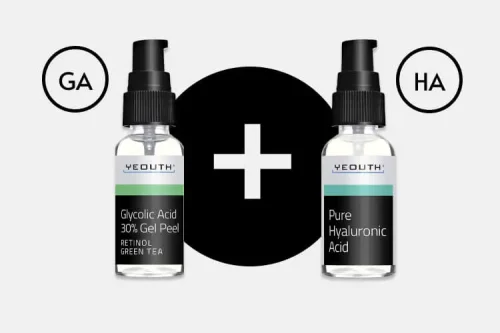
Glycolic acid and hyaluronic acid, though distinct in their functions, work beautifully together in skincare routines. Each ingredient targets different skin needs, yet their combination offers a powerful synergy that enhances overall skin health.
Here’s how they complement each other:
How They Work Together
Glycolic Acid: The Science Behind Exfoliation
Glycolic acid, an alpha-hydroxy acid (AHA), works by breaking down the bonds between dead skin cells on the surface. This process unclogs pores, smooths rough texture, and encourages a fresher, more even skin tone.
Glycolic acid is particularly effective for targeting dull skin, fine lines, and hyperpigmentation by accelerating the skin’s natural renewal process.
Hyaluronic Acid: The Hydration Mechanism
Hyaluronic acid is a powerful humectant, meaning it draws moisture from the air into the skin. It hydrates and plumps the skin by attracting and holding water in the deeper layers.
This makes it especially beneficial for dry, dehydrated, or sensitive skin. By keeping the skin moisturized, hyaluronic acid also promotes a smooth, healthy complexion and can even aid in reducing the appearance of fine lines and wrinkles.
Why They Work Well Together
When used together, glycolic acid and hyaluronic acid complement each other in a skincare routine.
The exfoliation process caused by glycolic acid clears the skin’s surface, allowing moisturizers like hyaluronic acid to penetrate more effectively. Without exfoliation, moisturizers and other active ingredients can struggle to absorb properly.
However, glycolic acid can also cause some dryness or irritation after use, which is where hyaluronic acid steps in. By applying hyaluronic acid after glycolic acid, you replenish moisture lost during the exfoliation process, maintaining a healthy, hydrated skin barrier.
Best Skincare Routine
To get the best results, it’s essential to apply glycolic acid first to exfoliate, followed by hyaluronic acid to rehydrate and lock in moisture.
This order ensures that glycolic acid works its magic on your skin’s surface while hyaluronic acid nourishes the deeper layers, leaving your complexion plump, dewy, and more youthful-looking.
How to Incorporate Them into Your Routine

To fully enjoy the benefits of glycolic acid and hyaluronic acid, it’s essential to follow the correct steps when layering them into your skincare routine.
Here’s how to do it effectively:
Step 1: Cleansing
Begin with a gentle, non-stripping cleanser to remove dirt, oil, and other impurities from your skin. This prepares your skin to absorb active ingredients more effectively.
Choose a cleanser suited to your skin type—for example, a hydrating cleanser for dry skin or a gel-based cleanser for oily skin.
Step 2: Toning
After cleansing, apply an alcohol-free toner. Toners are designed to help balance your skin’s pH and hydrate it, making it more receptive to the active ingredients that follow.
If your toner contains mild exfoliants, like AHAs or BHAs, it can enhance the effects of glycolic acid and help further prep your skin for deeper exfoliation.
Step 3: Using Glycolic Acid
Now it’s time to apply glycolic acid. Use a thin layer of glycolic acid serum or toner, depending on your preference. This ingredient works by breaking down the bonds between dead skin cells to reveal smoother, more radiant skin underneath.
If you’re new to glycolic acid, start with 2-3 times a week and gradually increase use as your skin adjusts. Be cautious of redness or irritation, especially if you have sensitive skin.
Step 4: Using Hyaluronic Acid
After allowing the glycolic acid to absorb, apply hyaluronic acid. This powerful hydrator draws moisture into your skin, helping it stay plump and moisturized.
Hyaluronic acid is especially beneficial after exfoliation, as it helps restore hydration that may be lost during the process. Gently pat the serum into your skin for better absorption, and follow up with a thicker moisturizer if needed.
Step 5: Moisturizing
Apply a quality moisturizer to lock in hydration and keep your skin barrier strong. A moisturizer ensures that the active ingredients you’ve applied stay effective and don’t evaporate.
Choose a moisturizer with ingredients like ceramides, glycerin, or peptides to nourish the skin further and prevent any dryness or irritation.
Step 6: Sunscreen (AM Routine)
Always apply sunscreen in the morning if you’re using glycolic acid. Exfoliating acids like glycolic acid can make your skin more sensitive to the sun, increasing the risk of sunburn or pigmentation. Opt for a broad-spectrum SPF 30 or higher to protect your skin from harmful UV rays.
What Not to Mix with Glycolic Acid

While glycolic acid is a powerful skincare ingredient, there are certain ingredients you should avoid mixing with it to prevent irritation, over-exfoliation, or product ineffectiveness:
- Other AHAs (e.g., Lactic Acid, Citric Acid): Combining multiple AHAs can lead to over-exfoliation, irritating the skin and potentially weakening the skin barrier. It’s best to stick with one exfoliating acid at a time.
- BHAs (e.g., Salicylic Acid): Both glycolic acid and salicylic acid are exfoliants but work in different ways. While glycolic acid is water-soluble and primarily exfoliates the surface of the skin, salicylic acid is oil-soluble and penetrates deeper into pores. Using them together can be too harsh and may cause dryness and irritation.
- Vitamin C (Ascorbic Acid): While both glycolic acid and vitamin C have great benefits for the skin, they have different pH levels. Glycolic acid is acidic, and when mixed with vitamin C, it can destabilize the vitamin C molecule, reducing its effectiveness. To avoid this, use glycolic acid in your evening routine and vitamin C in the morning.
- Retinoids/Retinol: Retinoids and retinol are potent ingredients for cell turnover and collagen production. However, they can be harsh when used alongside glycolic acid, leading to irritation, peeling, and dryness. It’s best to use them on alternate nights, allowing each ingredient to work without overwhelming the skin.
- Benzoyl Peroxide: While effective for acne, benzoyl peroxide can be drying and irritating, particularly when combined with glycolic acid. If you’re using benzoyl peroxide, alternate between it and glycolic acid on different days or use one in the morning and the other at night.
Conclusion
Pairing glycolic acid and hyaluronic acid is a skincare win! While glycolic acid exfoliates, hyaluronic acid hydrates, ensuring your skin stays smooth, radiant, and healthy. Just remember to layer correctly and always follow with SPF for best results.
Level up your skincare with our glycolic and hyaluronic acid products! Visit Zicail for expert solutions and radiant skin.


 EN
 JA
