

If skincare terms feel confusing, you’re not alone. Hydration and moisture sound similar, but they play different roles in keeping skin healthy.
Hydration refers to the water content inside your skin cells. When skin is well hydrated, it looks plump, flexible, and comfortable. Ingredients like glycerin or hyaluronic acid help pull and hold water in the skin.
Moisture, on the other hand, refers to oils and lipids that slow water loss. These include ceramides, fatty acids, and occlusives that form a protective barrier on the skin surface, preventing hydration from escaping.
Hydrated vs. Moisturized Skin: What You Can See and Feel
Hydration and moisture affect how your skin looks and feels in different ways.
Knowing the signs helps you choose the right fix—without overcorrecting.
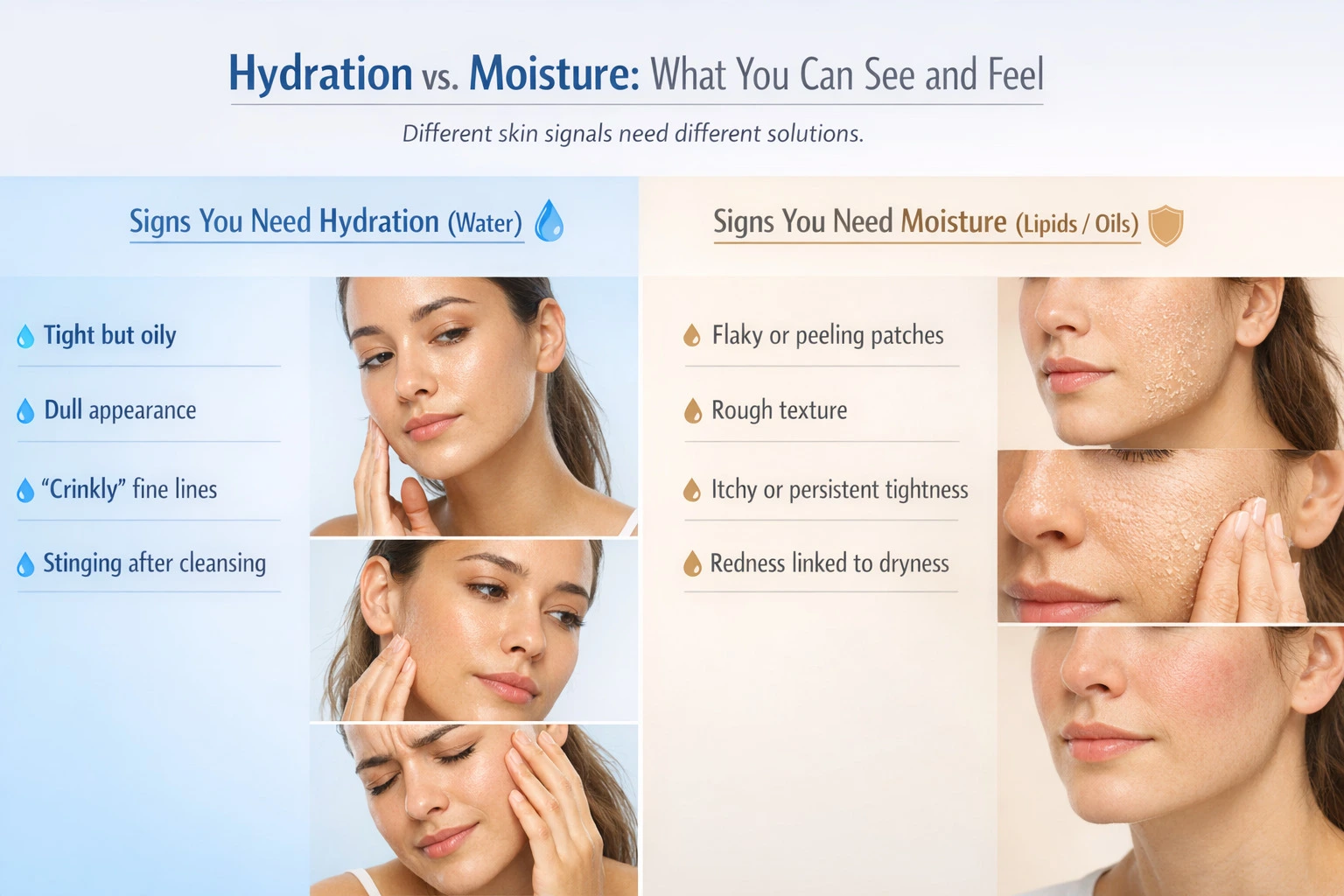
Signs You Need Hydration (Water)
These point to low water content inside the skin:
Tight but oily skin (shiny surface, uncomfortable feel)
Dull or flat appearance
Fine lines look “crinkly”, especially when smiling
Stinging or burning after cleansing or applying products
These signs are common after harsh cleansers, hot showers, long flights, or overusing exfoliants.
Signs You Need Moisture (Lipids/Oils)
These suggest your skin can’t hold onto water well:
Flaky or peeling patches
Rough, uneven texture
Itchiness or tightness that doesn’t improve with water-based products
Redness caused by dryness or barrier weakness
Important (and Often Missed): You Can Be Oily and Dehydrated
Oily skin can still lack water.
In fact, dehydration may trigger more oil production as the skin tries to protect itself. That’s why heavy creams alone don’t always help—and why lightweight hydration plus barrier support often works better.
Dry Skin vs. Dehydrated Skin
These two terms are often used interchangeably—but they’re not the same, and treating them the same way can backfire.
Quick Comparison
| Skin Concern | What’s Lacking | What It Needs Most |
|---|---|---|
| Dry skin | Oil (lipids) | Moisture + barrier repair |
| Dehydrated skin | Water + weak barrier | Hydration and moisture |
Dry Skin (a skin type)
Dry skin naturally produces less oil. This is largely genetic and tends to be long-term.
Feels tight most of the time
Prone to flaking and rough texture
Often worsens in winter or dry climates
Needs lipids to strengthen the barrier
Dehydrated Skin (a skin condition)
Dehydrated skin lacks water, not oil. It can happen to any skin type—including oily and acne-prone.
Feels tight but may look shiny
Looks dull; fine lines appear more visible
Stings easily after cleansing
Linked to high TEWL (transepidermal water loss)
Needs water + barrier support
Common Triggers for Both
Cold or windy weather
Hot showers
Harsh or foaming cleansers
Over-exfoliation (acids, scrubs, retinoids)
Air conditioning or indoor heating
The Ingredient Map: Hydration vs. Moisture
Understanding ingredients makes the hydration vs. moisture difference clear—and helps you avoid buying products that don’t solve your real problem.

Hydration Ingredients (Humectants)
Humectants attract and hold water in the skin. They work best when paired with a moisturizer.
Common, well-tolerated options include:
Glycerin – reliable, effective, and skin-friendly
Hyaluronic acid – binds water for a plumper feel
Panthenol (pro-vitamin B5) – hydrates and supports comfort
Beta-glucan – soothing, hydration-supporting
Aloe – lightweight hydration and calming
Urea (low %) – hydrates while smoothing texture
Best for: tight, dull, or dehydrated skin—even if it’s oily.
Moisture Ingredients
These don’t add water—but they help skin keep the water it already has.
Emollients (Smooth + Fill Gaps)
Emollients soften skin and support the barrier by filling spaces between skin cells.
Ceramides
Fatty alcohols (like cetearyl alcohol)
Occlusives (Seal + Reduce Water Loss)
Occlusives form a protective layer that slows TEWL.
Petrolatum
Beeswax
Mineral oil
Best for: dry, flaky skin or when moisture escapes easily.
“Hydration + Moisture” Layering Logic
Layering matters as much as the products themselves.
Used in the wrong order, even good ingredients won’t deliver lasting results.

Step 1: Apply Hydration First
Use hydrating products (humectants) on slightly damp skin—right after cleansing or misting.
This gives ingredients like glycerin or hyaluronic acid water to bind to
Helps skin feel plumper and more comfortable right away
Step 2: Follow With Moisture (Lipids)
Next, apply a moisturizer containing lipids such as ceramides or squalane.
Slows water loss
Improves long-term comfort and texture
Step 3: Seal Only If Needed
In dry climates, winter, or at night, a light occlusive layer can help.
Reduces overnight water loss
Not necessary for everyone—especially oily or acne-prone skin
The Simple Rule to Remember
Thin → thick
Water → lipids → seal
If you remember just this order, you’ll avoid most hydration and moisture mistakes—and get more from every product you use.
Best Product Types by Skin Situation
The right hydration–moisture balance depends on your skin’s behavior, not just its label.
Use this guide to adjust without overcomplicating your routine.

If You’re Oily or Acne-Prone
You still need hydration—but keep textures light.
Lightweight humectant serum (glycerin or hyaluronic acid)
Gel-cream or lotion moisturizer with barrier support
Avoid heavy occlusives for daily use; they may feel greasy or clog-prone
This approach helps prevent dehydration-triggered oil rebound.
If You’re Dry or Flaky
Your skin needs more lipid support to hold onto water.
Richer cream with ceramides and fatty acids
Optional occlusive at night to reduce overnight water loss
Focus on comfort and barrier repair, especially in colder months
If You’re Sensitive or Reactive
Less is more.
Fragrance-free, minimal formulas
Barrier-first ingredients like ceramides and glycerin
Introduce new products slowly and patch-test when needed
A calm barrier often reduces sensitivity on its own.
If You Live in a Dry Climate or It’s Winter
Environment matters more than skin type here.
Prioritize hydration + a stronger sealing step
Indoor heating and cold air increase water loss, even for oily skin
Night routines often benefit most from added moisture
Common Mistakes That Stop Results
If hydration or moisture “isn’t working,” it’s often because of a few common habits—not the products themselves.
Using Only Hyaluronic Acid Without Sealing
Humectants pull in water, but without a moisturizer on top, that water evaporates quickly.
Fix: Always follow hydrating serums with a lipid-based moisturizer.
Over-Cleansing or Over-Exfoliating
Too much cleansing or frequent acids weaken the barrier and increase TEWL.
Fix: Cleanse gently, once or twice daily max. Exfoliate sparingly.
Hot Showers and Rough Towel Drying
Heat and friction strip oils and worsen dehydration.
Fix: Use lukewarm water and pat dry—don’t rub.
The “Greasy = Moisturized” Myth
Oil alone doesn’t equal healthy skin.
Fix: Moisturization is about barrier support, not shine. Look for ceramides, not just oils.
Switching Too Many Products at Once
When something irritates your skin, you won’t know why.
Fix: Change one product at a time and give it at least 1–2 weeks.
How Long Until You See Results?
Hydration and moisture work on different timelines, so it helps to know what progress actually looks like.
Short-Term: Hydration Comfort
You may notice improvements the same day or within 1–3 days:
Skin feels less tight
Products sting less
Skin looks slightly plumper
This is a good sign that your skin is responding to added water.
Longer-Term: Moisture and Barrier Resilience
True barrier support takes consistency, not intensity. Expect changes over 2–4 weeks:
Fewer dry or flaky patches
Skin feels more comfortable throughout the day
Reduced sensitivity to “normal” products
What “Working” Really Feels Like
Progress usually follows this order:
Less stinging → less tightness → smoother texture
If you’re seeing this pattern, your routine is doing its job—even if results feel gradual.
Tip: If irritation or dryness worsens after a few weeks, simplify your routine and reassess.
FAQs About Hydration vs Moisture
If you’re still unsure, these quick answers cover the most common hydration vs moisture questions.


 EN
 JA
