

What Are Ceramides?
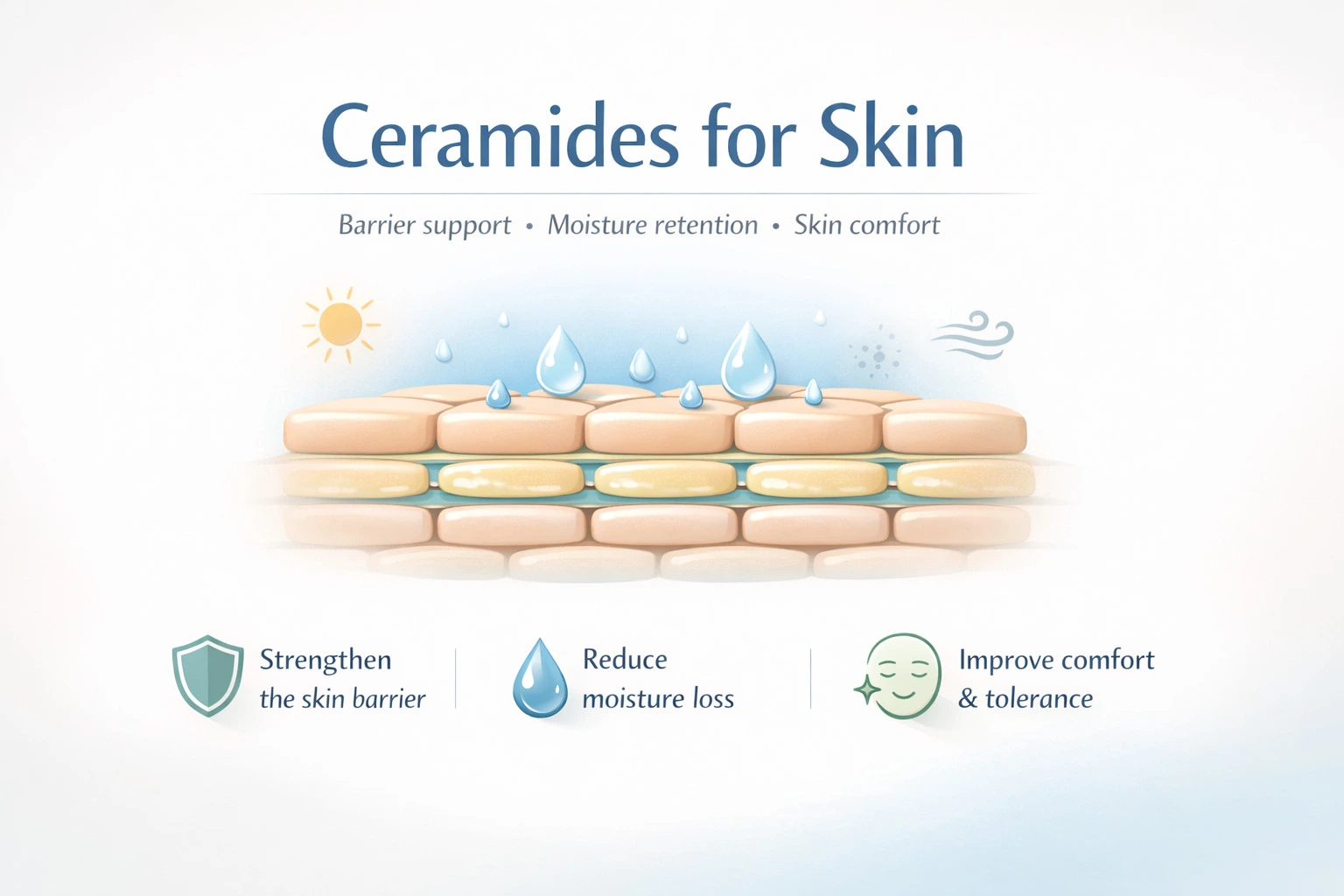
Ceramides are skin-identical lipids—fats your skin already makes naturally. They live in the outermost layer of the skin, called the stratum corneum, and play a key role in keeping your skin healthy and comfortable. As explained by Cleveland Clinic, ceramides help protect the skin barrier and prevent moisture loss.
The “Brick & Mortar” Model
Dermatologists often explain the skin barrier like a wall:
-
Skin cells = bricks
-
Lipids (ceramides, cholesterol, fatty acids) = mortar
The bricks give structure, but it’s the mortar that holds everything together.
When that mortar is strong, water stays in and irritants stay out. When it breaks down, the wall leaks—leading to dryness, sensitivity, and irritation.
What Do Ceramides Do for Your Skin?
Ceramides don’t promise overnight glow—and that’s a good thing. Their benefits are practical, structural, and evidence-based, focused on keeping skin comfortable and resilient.
1) Reduce Moisture Loss
Result: less tightness, flaking, and rough texture
Ceramides help seal gaps in the skin barrier, which slows transepidermal water loss (TEWL). When water stays in, skin feels softer and more flexible instead of tight or itchy.
You may notice:
-
Less “tight” feeling after cleansing
-
Fewer dry patches or flakes
-
Moisturizer lasting longer through the day
2) Strengthen Barrier Defense
Result: skin feels less reactive to everyday products
A well-supplied ceramide layer helps the skin barrier do its job: keep irritants out. Research summarized in dermatology literature indexed on PubMed shows that restoring barrier lipids can improve barrier function and reduce sensitivity.
In real life, this often means:
-
Products that used to sting feel comfortable again
-
Less redness after cleansing or showering
-
Skin becomes more predictable, not “reactive”
3) Support Calmer-Looking Skin
Result: skin appears more even and comfortable, especially when dry or sensitive
Ceramides don’t treat inflammation directly like medications do, but by fixing the barrier, they remove a major trigger of irritation. This is why ceramide-focused routines are commonly used alongside gentle care for dry, sensitive, or eczema-prone skin.
What this looks like day to day:
-
Fewer flare-ups from weather changes
-
Less visible irritation linked to dryness
-
Skin that looks calmer because it’s better protected
Signs You May Be Low on Ceramides
You don’t need lab tests to suspect low ceramide levels. In practice, ceramide depletion shows up as how your skin feels and reacts, especially during everyday routines.

Common Signs to Watch For
If several of these sound familiar, your skin barrier may be lacking ceramides:
-
Tight or uncomfortable after cleansing, even with a gentle wash
-
Stinging or burning when applying products that used to feel fine
-
Dry or rough patches that don’t improve with regular moisturizer
-
Skin that feels “suddenly sensitive” without a clear reason
These signs often appear together and tend to worsen with frequent cleansing or active-heavy routines.
Common Triggers That Deplete Ceramides
Ceramide levels naturally decline over time, but certain factors speed the process up:
-
Cold or dry weather, which increases water loss
-
Harsh or frequent cleansing, especially with foaming or high-pH products
-
Overuse of acids or retinoids, particularly without barrier support
-
Aging, which reduces the skin’s ability to make ceramides on its own
Ceramides vs. Other Hydrators
| Ingredient Type | Main Role | What It Does for Skin | Best For |
|---|---|---|---|
| Ceramides | Seal & support the barrier | Reduce moisture loss and strengthen skin’s protective layer | Tight, dry, sensitive, or overworked skin |
| Hyaluronic Acid | Humectant | Pulls water into the skin for instant hydration | Dehydrated, dull, or plumpness-seeking skin |
| Glycerin | Humectant | Attracts and holds moisture at the skin surface | Daily hydration for most skin types |
Types of Ceramides in Skincare
If you’ve looked at ingredient lists, you’ve probably seen names like Ceramide NP, AP, or EOP. These letters can look technical—but they’re simpler than they seem.
Common INCI Names You’ll See
-
Ceramide NP
-
Ceramide AP
-
Ceramide EOP
These are lab-made ceramides designed to closely mimic the ceramides found in human skin. As cosmetic chemists often explain (including educators at Chemist Confessions), different ceramides play slightly different roles in the skin barrier, which is why formulas may include more than one type.
Why There Are “Types” at All
Your skin barrier isn’t built from a single ceramide—it uses a blend. Skincare formulas list different ceramide types to better replicate that natural mix, supporting barrier structure rather than relying on one lipid alone.
This doesn’t mean you need to memorize the letters. Their presence mainly signals barrier-focused formulation, not strength or potency.
What Matters More Than the Letters
For real-world results, the full formula matters far more than which ceramide type appears on the label.
Pay attention to:
-
Texture: light lotion vs. rich cream should match your skin type
-
Supporting lipids: cholesterol and fatty acids help ceramides work better
-
Irritants: fragrance or high alcohol can offset barrier benefits for sensitive skin
A well-balanced formula with ceramides will usually outperform a product that highlights a specific ceramide name but ignores comfort and tolerance.
Who Should Use Ceramides?
Ceramides aren’t just for “very dry” skin. They support the barrier across many skin types—what changes is how you use them and in what texture.
Dry or Dehydrated Skin
Best use: daily support, especially in cold weather or air-conditioned spaces
Dry environments increase water loss, which quickly exposes low ceramide levels. Consistent ceramide use helps skin hold moisture and feel comfortable longer.
How to choose
-
Cream or lotion textures
-
Pair with humectants (glycerin/HA) for better hydration
Sensitive or Reactive Skin
Best use: barrier-first routine with minimal irritants
When skin reacts easily, the goal is to reduce triggers and rebuild protection. Ceramides help restore the barrier without adding “active” stress.
How to choose
-
Fragrance-free formulas
-
Avoid harsh alcohols and overly complex ingredient lists
-
Patch-test new products when skin is flaring
Oily or Acne-Prone Skin
Best use: lightweight barrier support (not heavy occlusion)
Oily skin can still be ceramide-deficient, especially after over-cleansing or acne treatments.
How to choose
-
Gel-cream or light lotion textures
-
Non-greasy finishes that won’t feel occlusive
-
Use a smaller amount; adjust if pores feel congested
Using Retinoids or Acne Actives
Best use: buffer and support to reduce irritation
Retinoids, benzoyl peroxide, and exfoliating acids can lower ceramide levels over time. Adding ceramides helps offset dryness and sensitivity, making active treatments easier to tolerate.
How to use
-
Apply ceramides before or after actives (based on comfort)
-
Keep the routine simple on active nights
-
Increase ceramide use during adjustment periods
How to Choose a Ceramide Product
Not all ceramide products do the same job. The best choice depends on what your skin needs right now, not just what’s trending on the label.

1) Pick by Format (Match the Job to the Step)
Ceramides work best in leave-on products, but each format has a role:
-
Cleanser: gentle support only; helps reduce stripping but won’t repair the barrier on its own
-
Toner/Essence: light layering option if skin feels tight after cleansing
-
Serum: targeted barrier support with a lighter feel
-
Cream/Lotion: main workhorse for most people
-
Balm/Ointment: strongest sealing for very dry or compromised skin
Rule of thumb: the drier or more irritated your skin feels, the richer the format you’ll need.
2) Ingredient “Green Flags” (What to Look For)
Ceramides work better when paired with ingredients that support comfort and hydration.
Good signs on the label:
-
Ceramides (any type: NP, AP, EOP)
-
Humectants like glycerin or panthenol to draw in moisture
-
Simple, barrier-focused formulas
These combinations help skin feel comfortable while the barrier recovers.
3) Ingredient “Red Flags” for Reactive Skin
If your skin is sensitive or already irritated, be cautious with:
-
Heavy fragrance or strong essential oils
-
High levels of drying alcohol
-
Products that combine ceramides with multiple strong actives (acids, retinoids, exfoliants) in one step
Too much activity in a single product can cancel out the benefits of ceramides.
4) Use Texture Logic to Narrow Choices
Matching texture to skin type improves results and reduces breakouts:
-
Oily or acne-prone: gel-lotion or lightweight serum
-
Normal to dry: lotion or cream
-
Very dry or compromised: balm or ointment (especially at night)
Texture often matters more than the ceramide type listed.
How to Use Ceramides in a Routine
Ceramides work best when they’re used consistently and placed correctly in your routine. You don’t need special techniques—just a smart order.

Where Ceramides Fit
Morning (AM)
-
Cleanse
-
Ceramide product (serum, lotion, or cream)
Ceramides go after cleansing and before sunscreen to support the barrier throughout the day.
Night (PM)
-
Cleanse
-
Treatments (if any and well-tolerated)
-
Ceramide moisturizer as the main moisturizing step
At night, ceramides often work best as the last moisturizing layer.
The “Slightly Damp Skin” Tip
If your ceramide product also contains humectants (like glycerin or hyaluronic acid):
-
Apply it to slightly damp skin, not dripping wet
-
This helps pull in water
-
Ceramides then help seal that moisture in
If your skin is sensitive, you can skip this and apply to dry skin—results will still be good.
How Often to Use Them
-
Usually daily, morning and night
-
If the formula feels heavy or you notice congestion:
-
Reduce the amount, or
-
Use once daily instead of twice
-
Ceramides are generally well tolerated. Problems usually come from texture mismatch, not from ceramides themselves.
How Long Until You See Results?
Ceramides don’t work like an instant glow product. They improve skin by fixing structure, not by masking symptoms—so timing matters.
What Improves First (Days, Not Weeks)
Many people notice comfort changes within a few days, especially if their skin barrier was stressed.
Early signs it’s working:
-
Less stinging or burning when applying products
-
Skin feels less tight after cleansing
-
Fewer “hot” or irritated sensations
This usually means water loss is slowing and the barrier is stabilizing.
What Takes Longer
True barrier resilience builds gradually.
With daily use over 2–4 weeks, you may notice:
-
Smoother, more even-feeling skin
-
Dry patches improving or disappearing
-
Skin becoming more tolerant of normal routines
This timeline reflects how long it takes the skin barrier to reorganize and maintain lipids, not a lack of product effectiveness.
How to Tell If Ceramides Are Helping
A simple way to track progress is the order of improvement:
Less sting → less tightness → smoother feel
If you’re seeing this sequence, the ceramides are doing their job—even if your skin doesn’t look “perfect” yet.


 EN
 JA
