

The Real Difference: Coverage, Not SPF
Spray and lotion sunscreens can have the same SPF on the label, but that doesn’t guarantee the same protection on skin.
What matters most in real life is coverage—how evenly and completely sunscreen forms a protective film. If coverage is patchy or too thin, protection drops, no matter how high the SPF number looks.
This is why the spray vs. lotion debate isn’t really about the formula itself, but about how reliably each format helps people apply enough sunscreen, in the right way.
In everyday use, factors like application amount, coverage, and reapplication habits matter more than the SPF number alone.
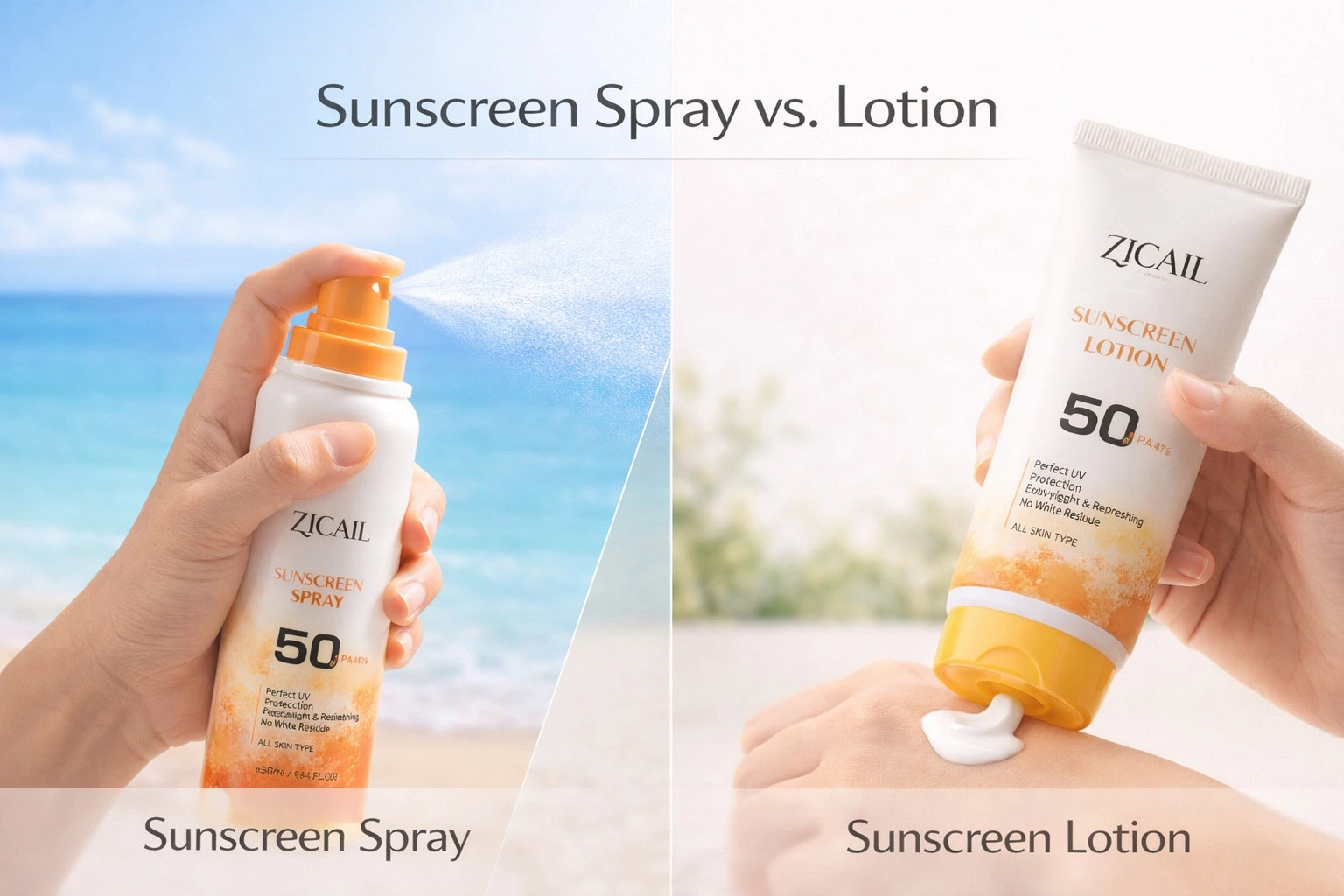
Pros & Cons: Spray vs. Lotion Sunscreen
Both spray and lotion sunscreens can protect your skin well—but they behave differently in real-world use.
Here’s a clear, practical comparison to help you decide which fits your routine.
Spray Sunscreen
Pros
Fast to apply, especially when you’re in a hurry
Helpful for hard-to-reach areas like the back or shoulders
Convenient for on-the-go reapplication, such as at the beach or during sports
Cons
Higher risk of uneven or insufficient coverage
Product can be lost to wind or overspray
Inhalation and eye irritation are concerns if sprayed near the face
Most sprays are flammable until dry, which requires extra care around heat
Lotion Sunscreen
Pros
Easiest to control amount and coverage, leading to more reliable protection
Generally better for the face, where precision matters
Encourages thorough application, including often-missed areas
Cons
Can feel heavier or stickier for some people
Takes more time and effort to apply evenly
May feel messy on hands during application
In everyday use, lotions often support more deliberate, even application, while sprays emphasize speed and convenience and depend more on careful technique. What matters most is choosing the format you can apply fully, evenly, and often.
How to Apply Spray Sunscreen Correctly
Spray sunscreen can protect well—but only if it’s applied with intention.
Most problems come from using too little or spraying too casually.

Don’t “Mist and Go”
A light mist isn’t enough.
Spray until the skin looks wet or glistening, then rub it in to create an even film. If you can’t spread it, you likely didn’t apply enough.
Be Careful Around the Face
Never spray directly onto your face. Instead:
Spray into your hands first
Then apply gently to the face, avoiding eyes and mouth
This reduces inhalation and eye irritation.
Mind the Air You’re In
Use sprays in a well-ventilated area. Avoid breathing in the mist—especially for children.
Distance and Wind Matter
Hold the nozzle close enough to wet the skin
Spraying from too far away wastes product
Wind can blow sunscreen off before it lands, leaving patchy coverage
Spray sunscreen is most effective when it’s applied generously, rubbed in, and used in a controlled environment—rather than sprayed quickly on the go.
How to Apply Lotion Sunscreen Correctly
Lotion sunscreen is straightforward—and that’s part of why it’s so reliable. A few simple habits make a big difference.

Apply Before You Go Outside
Apply lotion before sun exposure, giving it time to form an even protective film. Don’t rush this step at the door.
Be sure to cover commonly missed areas:
Ears
Neck
Hands
Hairline and scalp part
If it’s exposed to the sun, it needs sunscreen.
Reapplication Basics (and What “Water-Resistant” Means)
No lotion lasts all day.
Reapply at least every 2 hours during sun exposure
Reapply sooner after swimming, sweating, or towel-drying
“Water-resistant” means the sunscreen maintains protection for 40 or 80 minutes in water—not that it’s waterproof or lasts indefinitely.
Bottom line: Lotion works best when applied early, applied everywhere, and reapplied on time.
Safety Notes People Search For
Both spray and lotion sunscreens are regulated and widely used.
Still, there are a few safety points people commonly ask about—mostly related to how sprays are used, not whether sunscreen is safe.

Inhalation and Face Use
Spray sunscreens create fine particles that can be inhaled if sprayed near the face.
That’s why it’s safer to:
Avoid spraying directly onto the nose, mouth, or eyes
Spray into your hands first, then apply to the face
This is a usage issue, not a reason to avoid sunscreen.
Flammability Warnings
Many spray sunscreens contain propellants that are flammable until dry.
This is why labels advise:
Keeping sprays away from open flames or heat sources
Letting sunscreen fully dry before activities like grilling or lighting candles
Once dry on skin, the risk drops significantly.
Skin Sensitivity: Formula vs. Format
Irritation is usually linked to ingredients, not whether sunscreen is a spray or a lotion.
Common triggers include:
Fragrance
High levels of denatured alcohol
If you have sensitive skin, choosing fragrance-free and lower-irritation formulas matters more than the format itself.
Kids & Family Use (Practical Tips)
Applying sunscreen on children is mostly about control, comfort, and consistency.

Choosing Between Spray and Lotion
For most families, a mixed approach works best.
Lotion is usually better for the face, where precision matters
Spray can help with body reapplication, especially when kids won’t stay still
Using lotion for the first full application and spray later for touch-ups is a common, practical choice.
Why Extra Care Matters for Kids
Children are closer to the spray cloud and tend to move suddenly, which can make controlled application harder.
For this reason, many parents:
Prefer slower, more deliberate application
Choose the format that helps them apply sunscreen calmly and evenly
Avoid spraying directly near the face and focus on control rather than speed
This isn’t about fear—it’s about choosing the method that makes thorough protection easier for your child.
Activity-Based Choosing Guide
Different situations call for different choices.
Use this quick guide to match the sunscreen format to what you’re actually doing.

Beach or Pool Days
Start with a lotion as the first layer to ensure even, thorough coverage
Reapply carefully and on time
If you use a spray, rub it in and watch for missed spots
Water and towel drying remove sunscreen quickly, so technique matters more than speed.
Sports or Sweaty Activities
Choose a water-resistant formula (40 or 80 minutes)
Reapply earlier and more often, especially after heavy sweating
Use the format that lets you reapply fully without rushing
Daily Commute or Office Days
Either spray or lotion can work
Pick the one you’ll apply enough of and reapply when needed
Consistent use matters more than format in low-exposure settings
Common Myths That Lead to Sunburn
Many sunburns happen not because people skip sunscreen—but because of common misunderstandings about how it works.
“Spray Is Automatically Lighter, So It’s Better”
Spray sunscreen can feel lighter, but that doesn’t mean it protects better. The lighter feel often leads people to apply too little, which reduces real-world protection.
“One Quick Spray Coat Equals Full SPF”
SPF testing assumes a thick, even layer. A fast pass with a spray usually delivers far less product than needed to reach the labeled SPF.
“If It’s High SPF, I Can Apply Less”
High SPF doesn’t replace proper application. Using half the amount can dramatically lower protection—no matter how high the SPF number is.
“Water-Resistant Means Waterproof”
Water-resistant sunscreen only maintains protection for a limited time (40 or 80 minutes) in water or sweat. It still needs timely reapplication.


 EN
 JA
