

What Sunscreen Really Is & Why It Matters
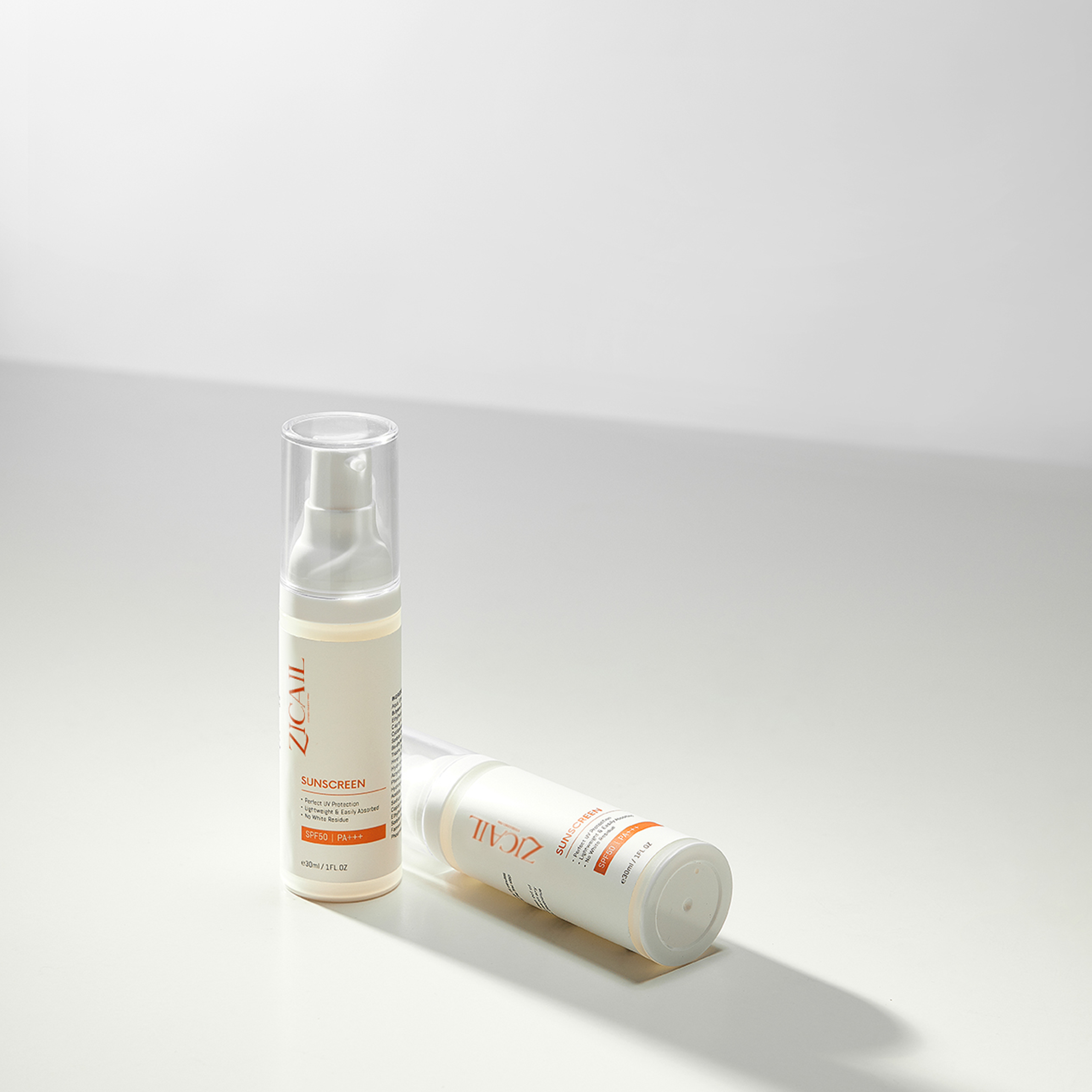
What sunscreen actually does
Sunscreen is a topical product that helps limit how much ultraviolet (UV) radiation reaches your skin. Some filters absorb UV energy, while others reflect it away. When used correctly, sunscreen reduces daily UV exposure—but it does not block all sunlight.
Why daily protection matters
Sunscreen is not just for beach days. Regular use helps protect the skin from cumulative sun damage, including:
Sunburn, which signals short-term UV injury
Visible skin aging, such as wrinkles, rough texture, and dark spots
Long-term skin cancer risk, which develops over years of exposure
These effects build gradually, which is why sunscreen matters even on days that don’t feel especially sunny.
UV damage isn’t always obvious
Sunlight contains more than one type of UV radiation, and skin damage doesn’t always show up as redness or pain. Some UV damage happens quietly and accumulates over time, making “how your skin feels” an unreliable guide to protection needs.
UVA vs. UVB vs. Broad-Spectrum: What’s the Difference
Understanding these labels helps you choose sunscreen based on real protection, not marketing claims. You don’t need the science—just the decision logic.

UVB: the burn you can see
UVB rays mainly affect the skin’s surface. They are the primary cause of sunburn and play a clear role in skin cancer risk.
SPF numbers measure protection against UVB only. A higher SPF means better UVB filtering—but it says nothing about UVA.
UVA: the damage you don’t feel
UVA rays penetrate deeper into the skin. They contribute to skin aging (wrinkles, loss of elasticity, uneven tone) and long-term DNA damage.
UVA exposure happens all day, year-round—even through clouds and window glass—and it doesn’t always cause redness or pain.
Broad-spectrum: why it matters
Broad-spectrum means the sunscreen protects against both UVA and UVB. This label is critical because:
SPF alone does not indicate UVA protection
UVA damage accumulates quietly over time
Daily sunscreen without UVA coverage leaves a major gap
Bottom line: A high SPF without broad-spectrum protection is incomplete protection.
If you want to understand how UVA and UVB affect the skin differently, see: Understanding UVA and UVB Rays: Protection & Risks
Quick decision check
If a sunscreen lists SPF only → UVB protection only
If it says “broad-spectrum” → UVA + UVB coverage
For daily use, anti-aging goals, or skin cancer prevention → broad-spectrum is non-negotiable
SPF Numbers Explained — What They Actually Mean
SPF is one of the most misunderstood labels in skincare. The number looks precise, but its real value is comparative, not absolute.

What SPF actually measures
SPF (Sun Protection Factor) indicates how well a sunscreen protects against UVB rays only—the type that causes sunburn. It does not measure UVA protection, which is why SPF must be paired with a broad-spectrum label.
In controlled testing, SPF roughly corresponds to the percentage of UVB filtered:
SPF 15 ≈ 93% UVB blocked
SPF 30 ≈ 97% UVB blocked
SPF 50 ≈ 98% UVB blocked
The key takeaway is not the exact numbers, but the pattern.
Why higher SPF has diminishing returns
As SPF increases, the added protection becomes smaller. The jump from SPF 15 to SPF 30 offers a meaningful improvement, but the difference between SPF 50 and SPF 100 is minimal in real life—especially if the product isn’t applied generously or reapplied.
Very high SPF can still be useful in intense sun exposure, but it doesn’t replace good habits like proper application and reapplication.
What SPF does not mean
A common myth is that SPF equals “time protected.”
For example, SPF 30 does not mean you can stay in the sun 30 times longer.
SPF testing assumes:
A fixed amount of sunscreen
No sweating, swimming, or rubbing
Ideal laboratory conditions
In everyday use, protection breaks down much sooner.
Practical takeaway
SPF compares relative UVB protection, not duration
Higher SPF helps, but only up to a point
Application amount and reapplication matter more than chasing the highest number
If you’re deciding between specific SPF levels, these comparisons may help:
– SPF 15 vs SPF 30
– SPF 30 vs SPF 50
How to Choose the Right SPF for Your Needs
Choosing SPF is less about finding the “strongest” sunscreen and more about matching protection to real-life exposure. Where you are, how long you’re outside, and what you’re doing matter more than the number alone.

Everyday urban vs. outdoor exposure
For most people, daily sun exposure comes from short, repeated moments—commuting, walking between buildings, sitting near windows. This still adds up over time, but it’s different from prolonged outdoor activity.
Everyday urban life: consistent, lower-intensity exposure
Outdoor activities: longer duration, higher intensity, more direct sun
Both require sunscreen, but not necessarily the same SPF.
Water resistance and sweat
If you’ll be swimming, exercising, or sweating:
Look for water-resistant formulas (40 or 80 minutes)
Reapplication becomes more important than SPF level
No sunscreen is truly waterproof—labels indicate testing time, not full protection
A practical SPF decision guide
Use this as a simple starting point, assuming broad-spectrum protection:
Low UV exposure (daily commute, brief outdoor time)
→ SPF 30 is usually sufficient when applied properlyModerate UV exposure (outdoor errands, casual sightseeing)
→ SPF 30–50, with reapplication if outside for extended periodsHigh UV exposure (beach days, sports, hiking, snow)
→ SPF 50+, water-resistant, with strict reapplication
The role of the UV index
The UV index reflects daily sun intensity, not just weather or temperature. Higher UV index days increase skin damage risk—even if it’s cool or cloudy.
UV index 3 or higher → sunscreen is recommended
Very high UV index → prioritize higher SPF and shorter exposure
For a complete step-by-step framework on selecting sunscreen based on skin type, lifestyle, and environment, see: How to Choose the Best Sunscreen for Your Skin
Chemical vs. Physical (Mineral) Sunscreens
This choice is less about “good vs. bad” and more about fit—how a sunscreen feels on your skin and how likely you are to use it correctly and consistently.

How they work (quick comparison)
Chemical sunscreens use organic UV filters that absorb UV radiation and release it as heat
Mineral (physical) sunscreens use zinc oxide and/or titanium dioxide to reflect and scatter UV rays
Both can provide effective, broad-spectrum protection when properly formulated.
One-sentence decision guide
If you want lighter texture and easier layering under makeup → chemical sunscreen
If you have very sensitive skin or prefer minimal irritation risk → mineral sunscreen
If white cast bothers you → chemical is often easier to wear
If eye stinging is an issue → mineral is often better tolerated
For texture, finish, and format-specific comparisons, you may also find these helpful:
– Gel vs Cream Sunscreen: Choose What’s Best
– Sunscreen Stick vs Spray: The Ultimate Comparison
– What Is Tinted Sunscreen? Benefits & Uses Explained
Safety, texture, and compatibility
Modern sunscreens—both chemical and mineral—are regulated and considered safe when used as directed. The practical differences most people notice are:
Texture: chemical formulas tend to feel lighter; mineral formulas can feel thicker
Appearance: mineral filters may leave a visible cast, especially on deeper skin tones
Skin response: mineral options are often chosen for reactive or post-procedure skin
There is no universally “better” type. The best sunscreen is the one you’ll apply generously and reapply consistently.
Correct Application & Reapplication Rules
Even a well-chosen sunscreen won’t protect your skin if it isn’t applied correctly. Most people under-apply, which reduces real-world protection far more than SPF choice does.

How much sunscreen to use
Sunscreen testing is based on a generous amount. For full-body coverage on an adult, this equals roughly:
One shot-glass amount (about 30 ml / 1 ounce)
For the face and neck alone, about two finger-lengths of product
Using less than this significantly lowers the protection you actually get.
When to apply
Apply sunscreen 15–30 minutes before sun exposure
This allows the product to form an even protective layer on the skin
For mineral sunscreens, immediate protection begins once applied, but even coverage still matters
Reapplication rules that matter
Sunscreen wears off with time, movement, and exposure. Reapply:
Every 2 hours when outdoors
Immediately after swimming, sweating heavily, or towel drying
More often if you’re rubbing your skin or wearing tight clothing
Water-resistant sunscreens extend protection during wet activities, but they still require reapplication.
If you wear makeup daily, this guide explains how to reapply sunscreen without disrupting your routine:
How to Apply Sunscreen Under Makeup for Full Protection
Common Sunscreen Myths & Clarifications
Misinformation around sunscreen often leads to under-protection, not overuse. Clearing up a few common myths can make daily sunscreen use more effective and less confusing.
“You don’t need sunscreen on cloudy days”
Clouds block visible light, not UV radiation. A large portion of UV—especially UVA—still reaches the skin on overcast days.
If the UV index is moderate or higher, sunscreen is still doing its job, even when the sun doesn’t feel strong.
“Makeup with SPF is enough”
Makeup and skincare products with SPF can contribute some protection, but they’re usually:
Applied in much smaller amounts than tested
Not reapplied throughout the day
Focused on UVB (SPF) rather than full-spectrum coverage
They’re best viewed as a supplement, not a replacement, for a dedicated sunscreen.
“Higher SPF means exponentially better protection”
SPF increases do not scale linearly. The difference between SPF 30 and SPF 50 is modest, and very high SPF doesn’t compensate for:
Applying too little
Skipping reapplication
Lacking broad-spectrum coverage
Good technique and consistency matter more than chasing the highest number.
If you’re dealing with specific sunscreen concerns, these guides go deeper:
– Can You Still Tan With Sunscreen?
– Why Sunscreen Leaves a White Cast & What to Do
– Does Sunscreen Cause Acne? Myths, Facts & Solutions
– Why Sunscreen Burns Your Eyes: Causes & Prevention Tips
Special Groups: Age, Skin Tone & Sensitivity
Sunscreen basics apply to everyone, but skin characteristics and life stage can change what feels comfortable—and what works best in daily use.
Children and babies
For babies under 6 months, sun avoidance (shade, clothing) is the priority
For older children, broad-spectrum SPF 30+ is recommended
Mineral sunscreens are often chosen for kids due to lower irritation risk, but proper application matters more than type
For a detailed breakdown of sunscreen choices by age group, see:
Kids vs Adult Sunscreen: Key Differences Explained
Deeper skin tones
Darker skin has more natural melanin, which offers some UVB protection—but it does not block UVA damage.
Sunscreen still helps reduce photoaging and hyperpigmentation
Broad-spectrum coverage is important, even without frequent sunburn
Texture and white cast are practical concerns—formulation choice matters for consistency
This topic is covered in more detail here:
Do Black People Need Sunscreen? The Real Truth
Sensitive and reactive skin
If your skin stings, burns, or flares easily:
Look for simpler formulas with fewer fragrance or alcohol triggers
Mineral options are often better tolerated, but not universally
Patch testing new sunscreens is a practical step, not an overreaction
No single sunscreen fits everyone. Comfort, tolerance, and appearance all affect whether you’ll use it consistently—and consistency is what protects skin long term.
Safety, Expiration & Environmental Notes
Sunscreen is regulated and safe for regular use, but a few practical details can affect how well it actually protects.
Does sunscreen expire?
Yes. Sunscreen has an expiration date, and effectiveness can drop over time.
Most products remain stable for about three years if unopened
Heat and light can speed up breakdown, even before the printed date
If a sunscreen smells off, separates, or changes texture, it’s best to replace it
Using expired sunscreen may leave you under-protected without realizing it.
For signs, shelf life, and storage mistakes, see:
Does Sunscreen Expire? Shelf Life & Safety Tips
How to store sunscreen properly
To help maintain stability:
Store sunscreen in a cool, dry place
Avoid leaving it in hot cars, direct sunlight, or beach bags for long periods
Close caps tightly to reduce air and moisture exposure
Good storage supports consistent protection throughout the product’s lifespan.
Environmental considerations
Some sunscreens are marketed as “reef-safe,” usually meaning they avoid certain UV filters linked to coral harm in laboratory studies.
Real-world environmental impact depends on many factors, not just ingredients
Regulations vary by region, especially in marine parks and coastal areas
If this matters to you, check local guidelines and product labeling rather than relying on vague claims
Regulatory oversight
Sunscreens are regulated differently worldwide:
- In the United States, sunscreens are regulated as over-the-counter drugs by the Food and Drug Administration (FDA), which sets requirements for testing, labeling, and approved UV filters.
(Learn more from the FDA’s official sunscreen overview.) - In countries such as Australia, sunscreens fall under the oversight of agencies like the Therapeutic Goods Administration (TGA), which applies similarly strict standards for product evaluation and labeling.
(See the TGA’s overview of sunscreen regulation.) - Approved filters, testing methods, and labeling rules may vary by region, but all regulatory frameworks require evidence that sunscreens are both safe and effective when used as directed.
Quick Recap & Practical Daily Sunscreen Checklist
This guide is meant to make sunscreen simpler, not more complicated. If you remember the basics and apply them consistently, you’re already doing most of what matters.
A simple decision summary
Choose broad-spectrum protection every day
SPF 30 works for most daily situations; increase it for longer or stronger sun exposure
Pick a texture you’ll actually use—chemical or mineral both work
Apply generously and reapply when exposure continues
A practical daily routine tip
Treat sunscreen like the final step of your morning skincare routine. Apply it to exposed skin before leaving the house, even on busy days. For extended outdoor time, keep a travel-size sunscreen with you so reapplication is realistic—not something you plan but skip.
When to seek higher protection
Increase protection when:
You’ll be outdoors for longer than two hours
You’re near water, snow, or sand, which reflect UV
The UV index is high, even if the weather feels mild
Your skin is more vulnerable due to treatments, conditions, or recent irritation
This guide explains the core principles of sunscreen.
Related articles on this site focus on specific decisions, comparisons, or situations, without repeating the basics.


 EN
 JA
