

What Astaxanthin Is
Astaxanthin is a red-orange carotenoid antioxidant naturally found in certain microalgae, as well as in seafood like salmon and shrimp. In nature, it helps protect these organisms from intense sunlight and environmental stress.

In skincare and supplements, astaxanthin is valued for its strong antioxidant and protective properties. It helps neutralize free radicals caused by UV exposure, pollution, and everyday oxidative stress—key factors that contribute to visible skin aging.
What to expect from astaxanthin is support, not instant change. It’s used to complement long-term skincare routines focused on protection, resilience, and overall skin balance.
How Astaxanthin Benefits the Skin
Astaxanthin’s skin benefits come from how it protects skin cells from damage and supports long-term resilience.
Instead of acting as a harsh or fast-acting treatment, it works quietly in the background to help skin stay healthier over time.
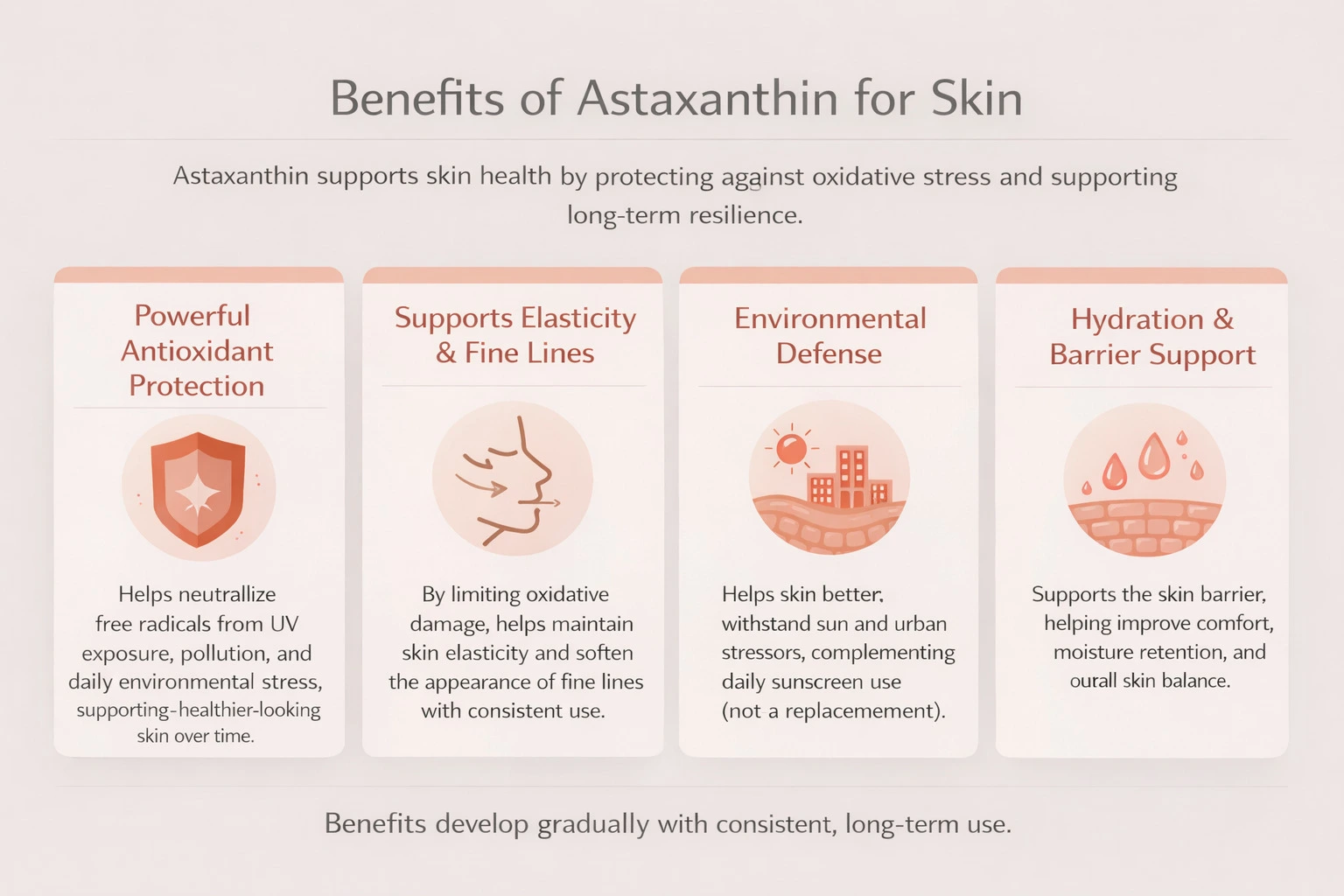
Powerful Antioxidant Protection
Astaxanthin is known for its strong ability to neutralize free radicals caused by UV exposure, pollution, and normal metabolism.
By reducing oxidative stress, it helps slow processes that contribute to premature aging, dullness, and uneven tone.
Support for Elasticity and Fine Lines
Oxidative damage weakens collagen and elastin.
By limiting this damage, astaxanthin helps preserve skin elasticity and can soften the appearance of fine lines with consistent use.
This is a supportive, gradual effect.
Environmental Defense for Daily Stress
Astaxanthin helps the skin better withstand environmental stressors, including sun exposure and urban pollution.
This protective role supports healthier-looking skin over time and complements daily sunscreen use—it does not replace it.
Hydration and Barrier Support
By protecting the skin barrier from oxidative stress, astaxanthin indirectly supports better moisture retention and comfort.
Skin may feel smoother, less stressed, and more balanced with regular use.
Professional perspective: Astaxanthin works best as a long-term protective ingredient. Its value lies in prevention and support—helping skin age more gracefully rather than forcing rapid visible change.
Astaxanthin in Skincare vs Supplements
Astaxanthin can support the skin in two different ways, depending on whether it’s applied topically or taken as a supplement.
Each approach works on a different level.
Topical Astaxanthin (Serums & Creams)
When applied to the skin, astaxanthin works mainly on the surface and upper skin layers.
Helps protect against oxidative stress from UV exposure and pollution
Supports the skin barrier and daily environmental defense
Best for targeted, local support in a skincare routine
Topical use focuses on protection and prevention, especially when paired with sunscreen.
Oral Astaxanthin Supplements
When taken orally, astaxanthin is absorbed into the bloodstream and can support the skin from within.
Research suggests supplementation may help improve skin elasticity, moisture, and the appearance of fine lines over time
Provides systemic antioxidant support that reaches deeper skin structures
Results tend to be gradual and depend on consistent intake
Using Both Together
For some people, combining topical skincare with oral supplementation may offer broader antioxidant coverage.
Topical products protect the skin directly from external stress
Supplements support overall oxidative balance internally
Clinical note: Oral supplements should be used thoughtfully. If you have medical conditions, are pregnant, or take medications, it’s best to consult a healthcare professional before starting astaxanthin supplements.
Who Should Use Astaxanthin & When
Astaxanthin is best suited for people looking to strengthen their skin’s defenses rather than chase fast, aggressive changes.
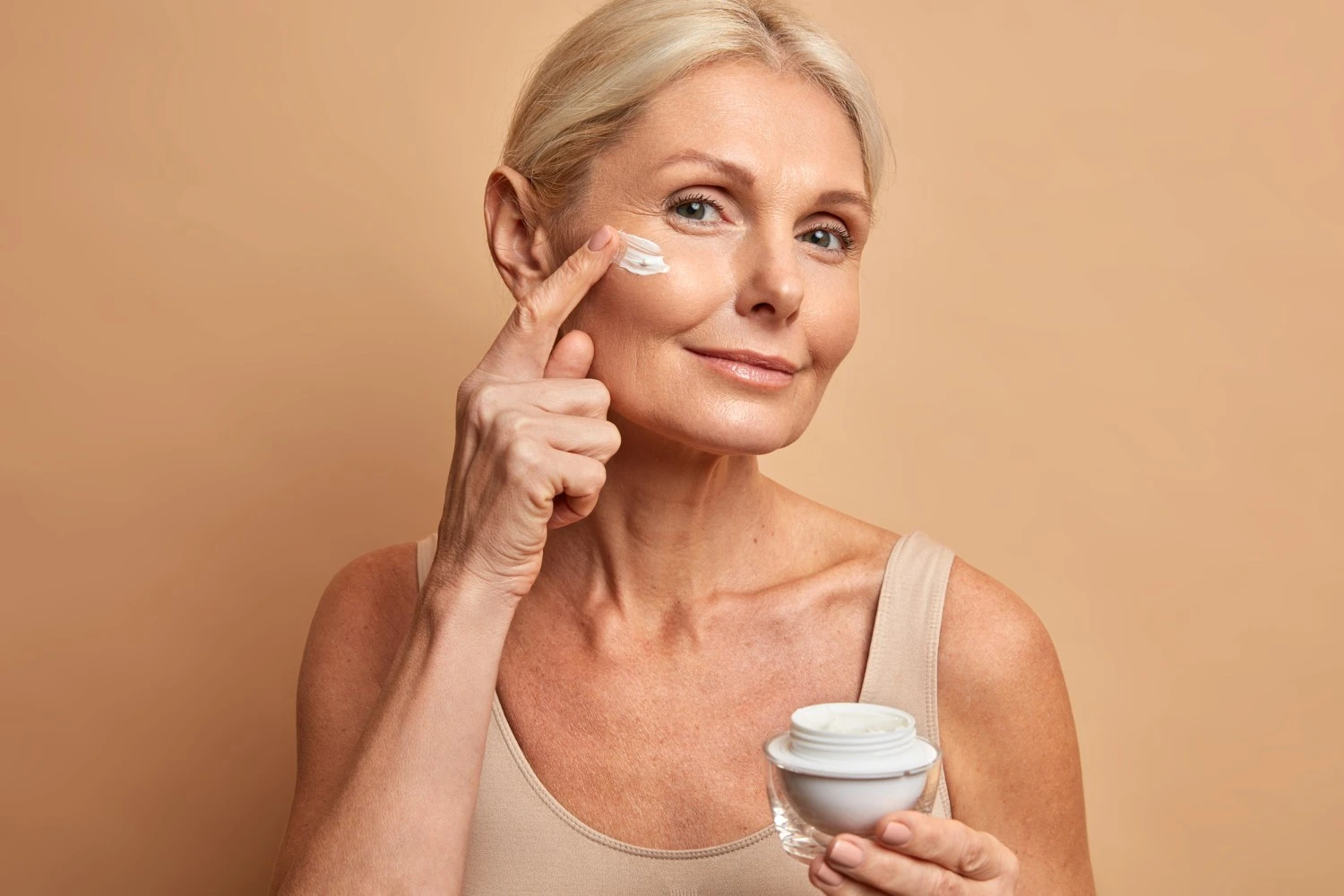
Who Benefits Most
Aging skin: Helps support elasticity and soften the look of fine lines by limiting oxidative damage over time.
Sun-exposed or environmentally stressed skin: Useful for people who spend time outdoors or live in polluted, urban environments.
Dull or tired-looking skin: Antioxidant support can help improve overall skin resilience and clarity.
Skin Type Compatibility
Astaxanthin has a gentle antioxidant profile, making it suitable for:
Dry, oily, combination, and sensitive skin
People who don’t tolerate strong actives like retinoids well
Minimal or barrier-focused routines
Important Perspective
Astaxanthin is a supportive ingredient, not a standalone solution.
It does not replace sunscreen, which remains essential for UV protection.
It works best alongside good barrier care, hydration, and consistent sun protection.
How to Use Astaxanthin Safely & Effectively
Astaxanthin is easy to fit into most routines because it’s gentle and supportive, not aggressive.
Proper placement and consistency matter more than intensity.
Routine Placement (Topical)
Apply after cleansing and any watery steps (like toner or essence).
Use astaxanthin before heavier creams or occlusives so it can spread evenly and absorb well.
It pairs well with hydrating serums, moisturizers, and barrier-repair products.
How Often to Use
Topical products: Most formulas are designed for daily use, either morning, evening, or both—follow product directions.
Oral supplements: Taken once daily, usually with food. Results are gradual and depend on consistent use.
If you’re new to antioxidant serums or have very reactive skin, start once daily and increase as tolerated.
Product Types & Formulations
Astaxanthin is used in both topical skincare and oral supplements, and its effectiveness depends largely on how it’s formulated.
Topical Serums & Creams
Designed to deliver localized antioxidant protection directly to the skin
Commonly found in serums, emulsions, and moisturizers focused on anti-aging and environmental defense
Often paired with hydrating and barrier-support ingredients to improve comfort and stability
Because astaxanthin is lipid-soluble, it’s typically formulated in oil-based or emulsified systems.
Well-designed formulas help protect the ingredient from oxidation and ensure even application.
Oral Supplements
Provide systemic antioxidant support, reaching the skin through circulation
May help improve skin elasticity, moisture, and overall resilience over time
Effects depend on dosage, absorption, and consistent use
Supplements are usually derived from microalgae and formulated with fats to improve absorption.
Concentration & Formulation Notes
Astaxanthin is effective at low concentrations, both topically and orally
Stability matters: exposure to light, heat, and oxygen can degrade it
High-quality products use protective packaging and compatible carriers to maintain potency
Common Mistakes & How to Avoid Them
Astaxanthin is most effective when it’s used realistically and consistently.
These common mistakes can limit results—or cause unnecessary frustration.
Expecting Instant or Dramatic Results
Astaxanthin works gradually by supporting skin defenses over time.
- It won’t deliver overnight brightness or rapid wrinkle reduction.
- Benefits build through consistent, long-term use, with changes appearing progressively rather than all at once.
- Results may vary depending on formulation, individual skin response, and overall routine consistency.
Better approach: Evaluate results over weeks, not days.
Overloading with Too Many Actives
Using multiple strong actives at once can overwhelm the skin.
Astaxanthin doesn’t need aggressive pairing to work.
Too many actives may increase irritation without added benefit.
Better approach: Keep your routine balanced—hydration, barrier care, antioxidants, and sun protection.
Professional reminder: With antioxidant care, consistency beats intensity. A simple, well-structured routine delivers better results than stacking every active available.
Safety, Side Effects & Precautions
Astaxanthin is generally considered safe and well tolerated, both in topical skincare and oral supplements, based on current research and clinical use.
What Most People Experience
Topical use: Rarely causes irritation. Some people may notice mild redness or sensitivity, especially if their skin barrier is already compromised.
Oral supplements: Usually well tolerated, though occasional digestive discomfort can occur in sensitive individuals.
How to Minimize Risk
Patch test topical products before full-face use, especially if you have reactive or sensitive skin.
Introduce new products or supplements one at a time to better understand how your skin or body responds.
When to Seek Professional Advice
If you are pregnant, nursing, or taking medication, consult a healthcare professional before using astaxanthin supplements.
Stop use and seek advice if you experience persistent irritation, allergic reactions, or unexpected symptoms.
Clinical perspective: Astaxanthin works best as a gentle, long-term support ingredient. Used thoughtfully and within a balanced routine, it poses a low risk for most people.


 EN
 JA
