

Skincare labels matter because they build trust, catch attention, and keep your product compliant with the rules. A clear label helps customers feel confident in what they’re buying and protects your brand from avoidable mistakes.
This checklist is for brand owners, suppliers, and designers who want to create labels that look good, read well, and meet all required regulations.
Core Regulatory Foundations
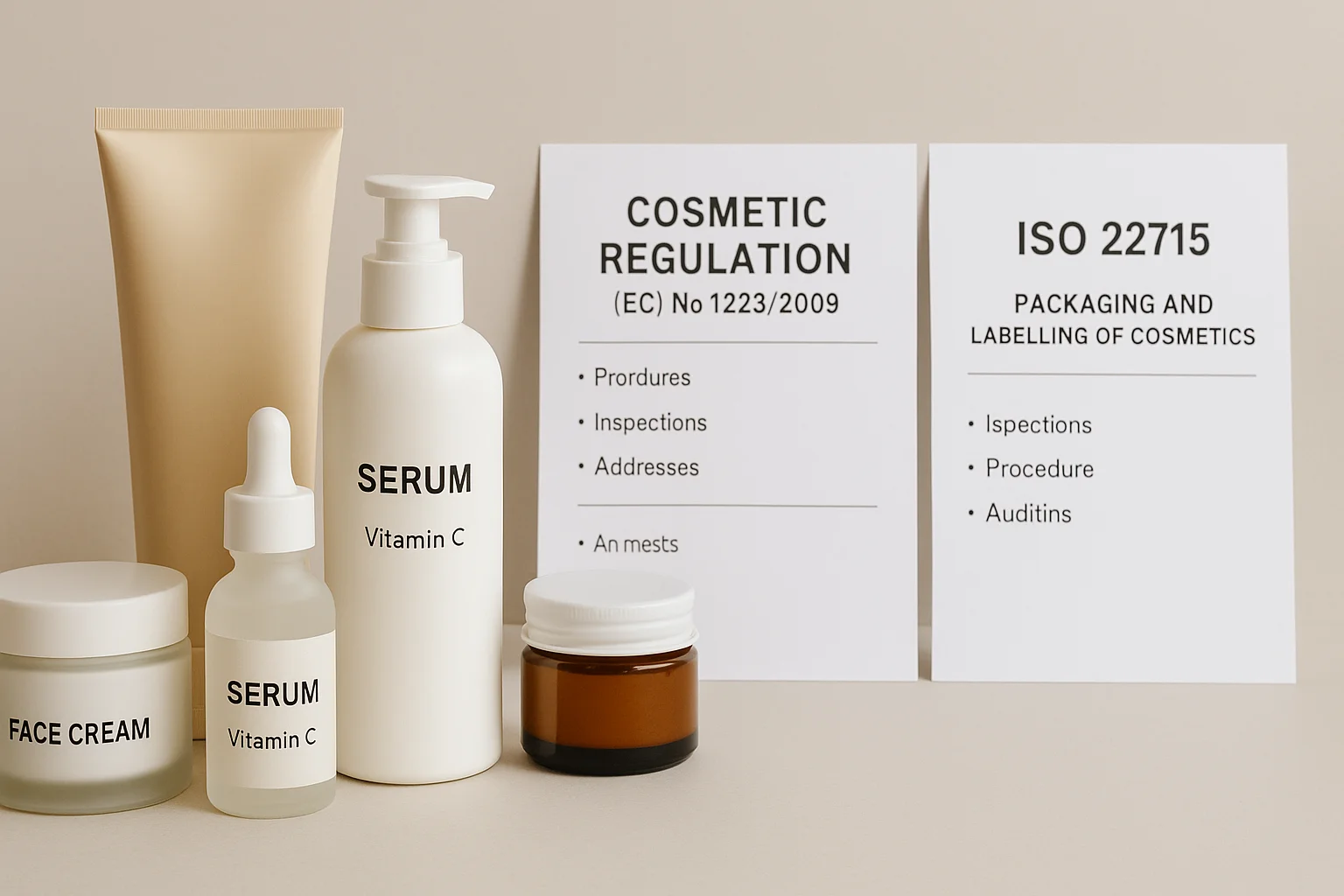
Every region has its own rules for skincare labels, starting with how they define a “cosmetic” versus a “drug.” In the U.S., the FDA says cosmetics are for cleaning or improving appearance, while drugs treat or prevent conditions. A small claim change can move your product from one category to the other and trigger stricter rules.
The U.S. FDA requires clear product identity, net quantity, ingredients, warnings, and manufacturer details.
The EU follows Regulation EC 1223/2009, which adds safety checks and strict ingredient rules. ISO 22715 also offers global guidelines for consistent packaging and labelling.
Because ingredient bans, units, and language requirements vary by region, labels often need adjustments for each market. Not following the rules can lead to warnings, recalls, or products being pulled from shelves. Compliance protects both your brand and your customers.
Label-Design Elements & Mandatory Info

- Statement of Identity: This is your product’s name and what it is—such as “Hydrating Face Cream” or “Vitamin C Serum.” Clear statements help shoppers understand the product’s purpose, following common guidelines like those shared by statement of identity (1).
- Net Quantity / Contents Declaration: The label must show how much product is inside, usually in both metric and imperial units. Placement and formatting must be easy to read, as noted in net quantity rules.
- Ingredient List (INCI Format): Ingredients must be listed in INCI format, arranged in descending order by weight. Only a few ingredients may qualify as trade secrets; most must be fully disclosed.
- Manufacturer / Distributor Information: Your label must include the manufacturer, packer, or distributor’s details. Adding a complete and accurate company address helps maintain transparency.
- Warnings, Instructions, and Batch Details: Important safety details—such as warnings, usage directions, batch codes, expiry dates, or PAO symbols—must be shown clearly. These are essential parts of safety information (2) that guide safe product use.
- Design and Layout Rules: Your label should follow standards for font size, readability, and correct placement on the Principal Display Panel to ensure clarity.
- Outer vs. Inner Packaging Requirements: When your product includes both a box and an inner container, each may require its own set of details. These packaging rules (3) help ensure complete compliance.
- Language and Regional Requirements: Some countries require bilingual or multi-language labels. Canada, for example, needs English and French. These language requirements (4) help products meet regional standards.
Compliance Checklist: Pre-Press & Print Considerations

Key Items to Approve Before Printing
Clear product name + description on the front panel
Correct net quantity in the required units
Complete INCI ingredient list in descending order
Company name and address for transparency and traceability
Usage instructions and warnings shown clearly
No unapproved drug claims that could change the product category
Language, units, and formatting that match the rules of the target market
Design Quality & Print Readiness
Minimum font sizes (5), strong contrast, and easy readability
Durable label materials and adhesives suitable for humid or bathroom environments
Clean layout with enough spacing between text sections
Common Pitfalls to Avoid
Errors from DIY or template-based designs
Missing net weight or incorrect unit formatting
Font sizes that are too small to meet regulations
Wrong or missing bilingual text when required
Low-contrast text that becomes unreadable after printing
This checklist helps ensure your label is accurate, compliant, and fully ready for production—reducing costly reprints and protecting your brand before your product reaches the shelf.
Global Market & Multi-Region Labeling Challenges

Differences Across Regions
Label rules vary widely between the U.S., EU, Canada, Australia, and ASEAN countries. Each region has its own requirements for ingredients, warnings, languages, and layout, as seen in regional guidelines (6). These differences mean one design rarely works for every market.
Multi-Language & Unit Requirements
Selling globally often means handling multiple languages and unit formats. Canada requires both English and French, and some markets need metric-only units. Meeting these bilingual rules helps your product stay compliant and clear for local shoppers.
Digital Asset Management
Managing different label versions can get messy. Using digital asset management (7) tools helps you keep track of updates, prevent mistakes, and ensure only the correct version goes to print.
Balancing Consistency & Compliance
To stay consistent across markets, brands often keep the main design the same and add region-specific panels for legal details. This approach protects your brand identity while still meeting each market’s rules.
Design Innovation & Brand Value • Beyond Compliance

- Design That Lifts Your Brand: Good design makes your product look professional while staying compliant. Clear layouts, simple fonts, and clean visuals help your label stand out and feel trustworthy.
- Eco-Friendly Materials: More brands are using sustainable label materials like recyclable paper, biodegradable films, and proper recycling symbols. These choices support both branding and environmental goals.
- Honest and Supported Claims: Any claim—such as “dermatologist tested” or “eco-friendly”—must be truthful and backed by real evidence. Keeping claims honest protects your brand and avoids compliance problems.
- Durable Labels for Real Use: Skincare products often sit in humid bathrooms, so choosing waterproof materials and strong adhesives is important. Waterproof label tips help keep your packaging looking clean and intact.
- Clear Zoning for Better Layout: Dividing your label into a brand zone (visual story) and a compliance zone (legal text) makes your design easier to read while still meeting all requirements.
Supplier / Supply Chain & QC Considerations

- How Label Design Fits Into the Supply Chain: Label design affects sourcing, printing, and the whole production process. Clear files and reliable vendors help avoid delays and make sure every batch is printed correctly.
- Pre-Production Proofing: Before printing, check the layout, dieline fit, panel placement, and label durability. Catching issues early helps prevent mistakes later.
- Change Control: If your formula or packaging changes, your label must be updated too. A simple version-control system keeps everything accurate and consistent.
- QC on Label Arrival: When labels arrive, check print quality, text accuracy, colors, and batch codes. A quick inspection helps prevent problems once production begins.
Common Mistakes & Risk Mitigation
Common Label Mistakes
Some of the most frequent errors are simple but costly: missing mandatory information, listing ingredients in the wrong order, using fonts that are too small to read, making claims that aren’t supported, or showing a net quantity that doesn’t match the container size. These mistakes can lead to delays, recalls, or rejected shipments.
How to Reduce Risks
You can avoid most problems by involving regulatory teams early, using a clear compliance checklist, and running a quick mock audit before the label goes to print. Keeping a label version history also helps track updates and prevents old designs from being used by mistake.
If Your Label Gets Flagged
If regulators raise an issue, act fast. You may need to correct the label, redesign certain sections, or temporarily pull the product until the fix is complete. Having a documented process makes this smoother and protects your brand while maintaining compliance.
Ready to Create Compliant, Professional Skincare Labels?
A well-designed skincare label does more than meet legal requirements—it builds trust, strengthens your brand, and keeps your product ready for any market. By understanding regulations, following design best practices, and staying organized through proofing and QC, you can create labels that look great and stay fully compliant from production to shelf.

If you need support with compliant label design, packaging planning, or improving your workflow, contact us anytime. We’re here to help you build labels that are clear, professional, and ready for global sale.
FAQs
Can I use terms like “100% natural” on my skincare label?
Yes, but only if you can support the claim with real evidence. Words like “natural” or “100% natural” must be truthful and not misleading. If the claim isn’t backed up, it can raise compliance issues.
Do skincare products need FDA approval before being sold in the U.S.?
Most cosmetic products do not need FDA pre-approval. However, if your product makes drug-like claims (such as treating acne or healing skin), it may be classified as a drug and require stricter regulation. Cosmetics still must meet MoCRA requirements like facility registration and safety reporting.
Do I need to list every ingredient, including fragrances and colorants?
Yes. All ingredients must be listed in INCI format in descending order. Fragrances and color additives also need to be included, even if they are grouped under general names like “fragrance” or “color additive.”
Can I use multiple languages or show both metric and imperial units on the label?
Absolutely. Multi-language labels and dual units (mL + fl oz) are common for global products. Some countries even require bilingual labels, so including multiple languages can help with compliance across regions.
Can label mistakes really lead to product recalls or removal from shelves?
Yes. Missing mandatory info, misleading claims, tiny fonts, or incorrect net contents can result in a label being flagged as “misbranded.” This may lead to recalls, fines, or blocked shipments, so accuracy is essential.
References for this information:
(1) Artwork Flow, “FDA Cosmetic Labeling Regulations Explained,” Artwork Flow Official Resource Center, 2025.
(2) Rland Packages, “How to Label Your Cosmetic Products Correctly: A Step-by-Step Guide,” Rland Packages Official Blog, 2025.
(3) AWT Labels & Packaging, “FDA Checklist for Personal Care and Beauty Product Packaging Requirements,” AWT Official Blog, 2025.
(4) Hidden Path Creative, “Packaging Trends Product-Based Founders Should Pay Attention To,” Hidden Path Creative Official Blog, 2025.
(5) Blue Label Packaging, “6 Label Tips for Cosmetics and Beauty Products,” Blue Label Packaging Official Blog, 2025.
(6) QC Advisor, “Inspection Checklist: Skincare and Cosmetics,” QC Advisor Official Website, 2025.
(7) ManageArtworks, “Skincare Labeling 101,” ManageArtworks Official Blog, 2025.


 EN
 JA
