

In B2B markets, the talk about natural vs synthetic ingredients is more than just a trend. Natural means sourced from plants or minerals, while synthetic is made in labs for stable and consistent quality.
For buyers and brand owners, this choice affects cost, quality, and market image. This article will help you understand both sides so you can make smarter, more practical sourcing decisions.
What Are Natural and Synthetic Ingredients?
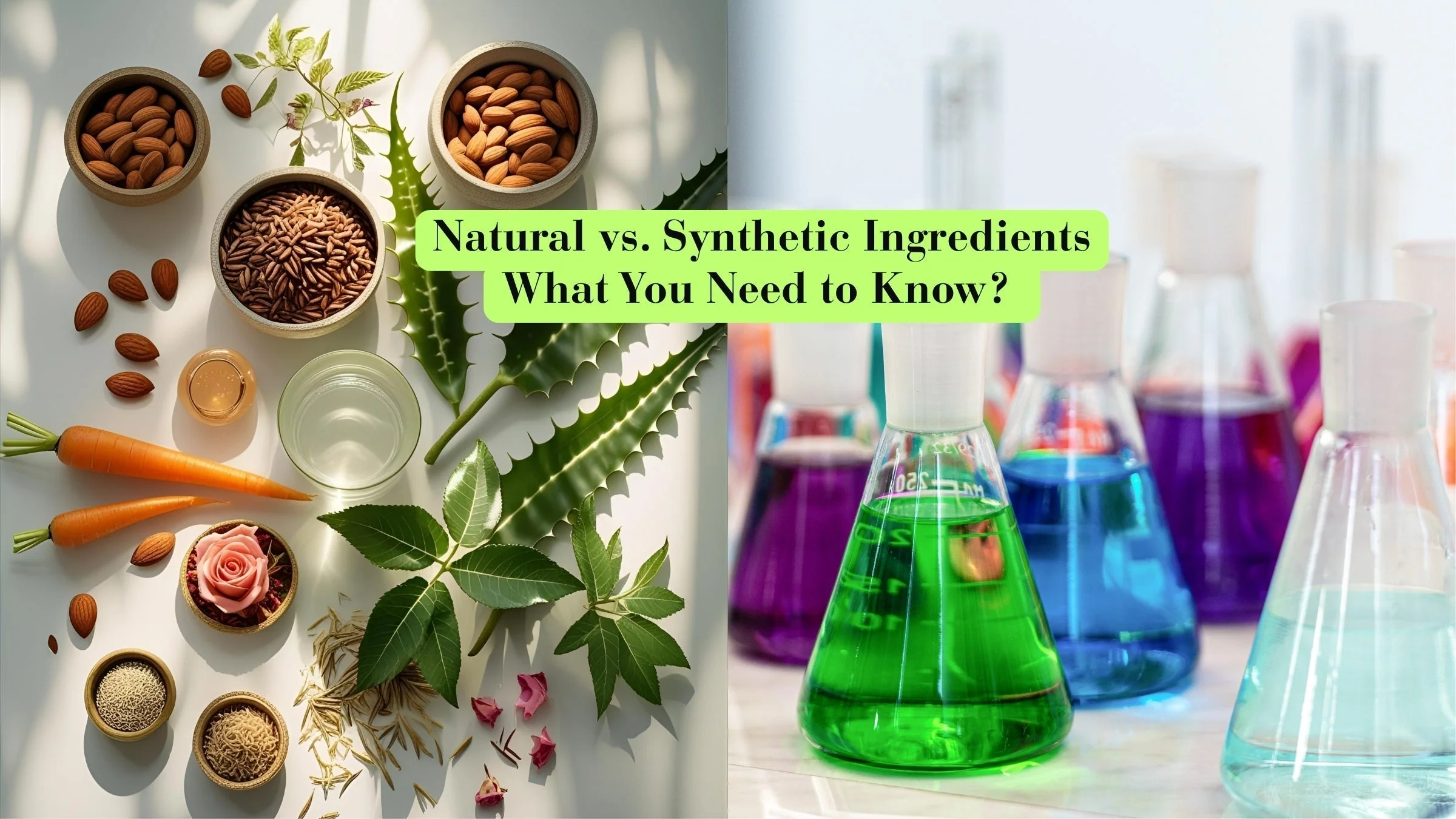
At the simplest level, natural ingredients come directly from nature — plants, minerals, or animals — and undergo minimal processing to make them safe or functional for use.
Synthetic ingredients, on the other hand, are created in controlled laboratory environments, often replicating natural molecules or improving them for better performance and stability.
Natural ingredients are valued for their clean image and consumer appeal, but their quality can vary based on harvest, season, and geography. Synthetic ingredients are engineered for consistency, making them easier to scale and integrate into mass production.
Examples
Natural: Aloe vera extract, shea butter, essential oils, beeswax
Synthetic: Hyaluronic acid (lab-fermented), synthetic vitamin E, fragrance compounds, preservatives like phenoxyethanol
Comparison Table
| Aspect | Natural Ingredients | Synthetic Ingredients |
|---|---|---|
| Source | Derived from plants, minerals, or animals | Created in labs through chemical synthesis or fermentation |
| Quality Consistency | Varies with harvest and supply | Highly consistent and controlled |
| Cost Drivers | Dependent on crop yield, climate, and extraction cost | Lower production cost once formula is established |
| Performance | Natural feel and appeal, but can degrade faster | Stable, predictable, and optimized for performance |
| Shelf Life | Often shorter | Longer and more stable |
| Scalability | Limited by natural availability | Easy to produce at scale |
| Sustainability | Depends on sourcing and farming practices | Can reduce resource use but raises eco-image concerns |
Both play important roles in product formulation — the key for B2B buyers is choosing the right balance between natural appeal and synthetic reliability to match brand goals and market demands.
Key Considerations for B2B Buyers

1. Cost Structure
Natural ingredients (1) often have unstable prices due to weather, harvest, and extraction costs. In contrast, synthetic ingredients (2) are easier to scale and keep pricing stable once production is set up.
2. Supply & Sourcing Risks
Natural supply chains can face problems like season limits or location risks. Traceability also takes extra work to confirm authenticity. Synthetic ingredients are more reliable because they can be made anywhere under controlled conditions.
3. Quality & Consistency
Natural ingredients (3) change with each harvest, making quality harder to control. Synthetics stay consistent batch after batch, offering better purity and reliability.
4. Regulation & Labelling
Clean-label trends push brands to use natural-sounding ingredients, but both types face strict rules. Buyers must balance marketing needs with safety and compliance.
5. Sustainability & Ethics
“Natural” (4) isn’t always greener — it can involve overharvesting or resource waste. Synthetic production can sometimes be cleaner and more transparent if managed responsibly.
6. Brand Positioning
Natural ingredients support premium, eco-friendly branding but cost more. Synthetics fit brands focused on innovation and performance. Many companies now mix both to balance image, cost, and reliability.
Emerging Trends & Strategic Recommendations for B2B Buyers

Growing Demand with More Scrutiny
The demand for natural ingredients keeps rising, but buyers now face more questions about sourcing and sustainability. Transparency and proof of origin are becoming must-haves.
Hybrid Solutions on the Rise
Many brands now mix natural and synthetic ingredients to balance cost, performance, and stability. This approach keeps products effective while maintaining a “natural” image.
Smarter Sourcing Strategies
Modern buyers focus on long-term supplier plans, risk checks, and traceability. Working with multiple partners helps reduce risk and keeps the supply chain stable.
Look at Total Value, Not Just Labels
Don’t judge ingredients only by the word “natural.” Compare them by performance, cost, and reliability to see which adds more real value to your business.
Stay Flexible with Trends and Rules
The meaning of “natural” changes over time. Keep watching new regulations and consumer shifts so you can adapt your sourcing and stay ahead of the market.
Ready to make smarter sourcing decisions for your brand?
Whether you’re exploring natural, synthetic, or hybrid ingredient solutions, our expert team can help you find the right balance between cost, performance, and sustainability.

Let’s work together to build a transparent, reliable, and future-ready supply chain for your business. Contact us today to discuss your ingredient needs and get tailored sourcing advice from our specialists.
FAQs
Are natural ingredients always safer than synthetic ones?
No — natural doesn’t automatically mean safer. Some botanical extracts may contain allergens or contaminants, while some synthetics are highly purified and stable. It really depends on sourcing, processing, and formulation.
Can synthetic ingredients ever support a “clean-label” claim?
Yes — if the synthetic ingredient is safe, well-documented, and fits the brand’s transparency standards, it can be used in clean-label products. It’s more about the overall ingredient profile, sourcing, and communication than simply “natural vs synthetic”.
How can a B2B buyer assess supply-chain risk when choosing natural ingredients?
Key checks include: verifying harvest season and yield variability, understanding geographical and climate risks, reviewing supplier traceability data (e.g., Certificates of Analysis), and having backup sourcing plans. These help mitigate the higher variability often found in natural chains.
If a brand claims “100% natural ingredients” is that realistic in B2B procurement?
Often not. Many products labelled “100% natural” may still include synthetic preservatives or stabilisers for safety and shelf life. For B2B buyers, it’s smarter to set realistic sourcing goals, evaluate each ingredient’s role, and balance marketing positioning with technical and supply requirements.
What’s the best sourcing strategy when I’m undecided about natural vs synthetic for a new product line?
Use a hybrid approach: define your brand positioning and target consumer, then evaluate each key ingredient by cost, performance, supply risk and sustainability. You might select natural ingredients where they add real marketing or sensory value, and synthetics where consistency or cost is critical. Then build sourcing plans accordingly (supplier diversification, long-term contracts, traceability).
References for this information:
(1) Roland Berger, “The Complex Shift to Natural Ingredients,” Roland Berger Official Website, 2025.
(2) The New Knew, “Natural vs Synthetic: What’s the Difference and Why It Matters,” The New Knew Official Website, 2025.
(3) Michigan State University, “What’s the Risk? Synthetic vs Natural Chemical Ingredients,” MSU Official Website, 2025.
(4) Green Beauty Community, “The Green Ingredient Debate: Synthetic vs Natural,” Green Beauty Community Official Website, 2024.


 EN
 JA
