

Why Compliance Matters
Bringing skincare products into the EU or US means entering two of the world’s most regulated beauty markets. Compliance isn’t optional—it’s the only way your products can pass customs, reach shelves, and build trust with consumers.

Why Skincare Imports Face Strict Rules
Skincare touches the skin every day, so regulators want to make sure products are:
Safe to use
Made with approved ingredients
Accurately labeled
Produced under clean, reliable conditions
These rules protect consumers from harmful substances and protect brands from expensive mistakes.

Risks of Not Meeting Requirements
If your products don’t meet EU or US standards, problems can happen fast:
Customs detention (1) or delays
Forced relabeling because of incorrect packaging
Recalls if products reach the market
Fines and legal issues
Shipments returned or destroyed
Non-compliance not only costs money—it damages your brand’s reputation.
EU Skincare Regulations (EC 1223/2009)
The European Union has one of the world’s strictest cosmetic laws, known as the EU Cosmetics Regulation (EC 1223/2009) (2). If you want to import skincare into the EU, this regulation tells you exactly what your product must meet before it can be sold.
Scope and Definition of Cosmetics

Under EU law, a product is considered a cosmetic if it is applied to the body for cleaning, perfuming, changing appearance, correcting body odors, protecting, or keeping the skin in good condition.
The EU also draws a clear line between:
Cosmetics — normal skincare and beauty products
Borderline products — items that could be cosmetics or medicines depending on claims (e.g., strong whitening, anti-acne, SPF)
Medicinal/OTC-drug products — regulated separately under medical law
Understanding this definition is important because your claims decide your product category. If you make drug-like claims, your product may be rejected or reclassified.
Responsible Person (RP) Requirements

To sell skincare in the EU, every product must have a European-based Responsible Person (RP). This is required under the EU Cosmetics Regulation and ensures that someone inside the EU is legally accountable.
What the RP Is Responsible For
The RP must make sure your product:
Is safe to use
Has all required documentation
Meets EU labeling rules
Passes ingredient compliance checks
Is ready for CPNP notification
The RP also serves as the official contact for EU authorities if questions or safety issues arise.
Who Can Be the RP?
Depending on your setup, the RP can be:
Your EU importer
Your EU distributor
A third-party compliance agency specializing in cosmetic regulations
Choosing a reliable RP is essential—they control market access.
Product Information File (PIF)

Before any skincare product enters the EU market, it must have a complete PIF, or Product Information File. This is a legal requirement and must be available for inspection at any time.
What the PIF Contains
A compliant PIF typically includes:
Full formula breakdown (INCI)
Toxicology and ingredient safety profiles
Microbiological testing results
Stability test reports
Cosmetic Product Safety Report (CPSR) — a key document proving safety
GMP evidence, usually aligned with ISO 22716 Good Manufacturing Practices
This file shows that your product is safe, stable, and produced under controlled conditions.
Ingredient Restrictions & Approved Lists
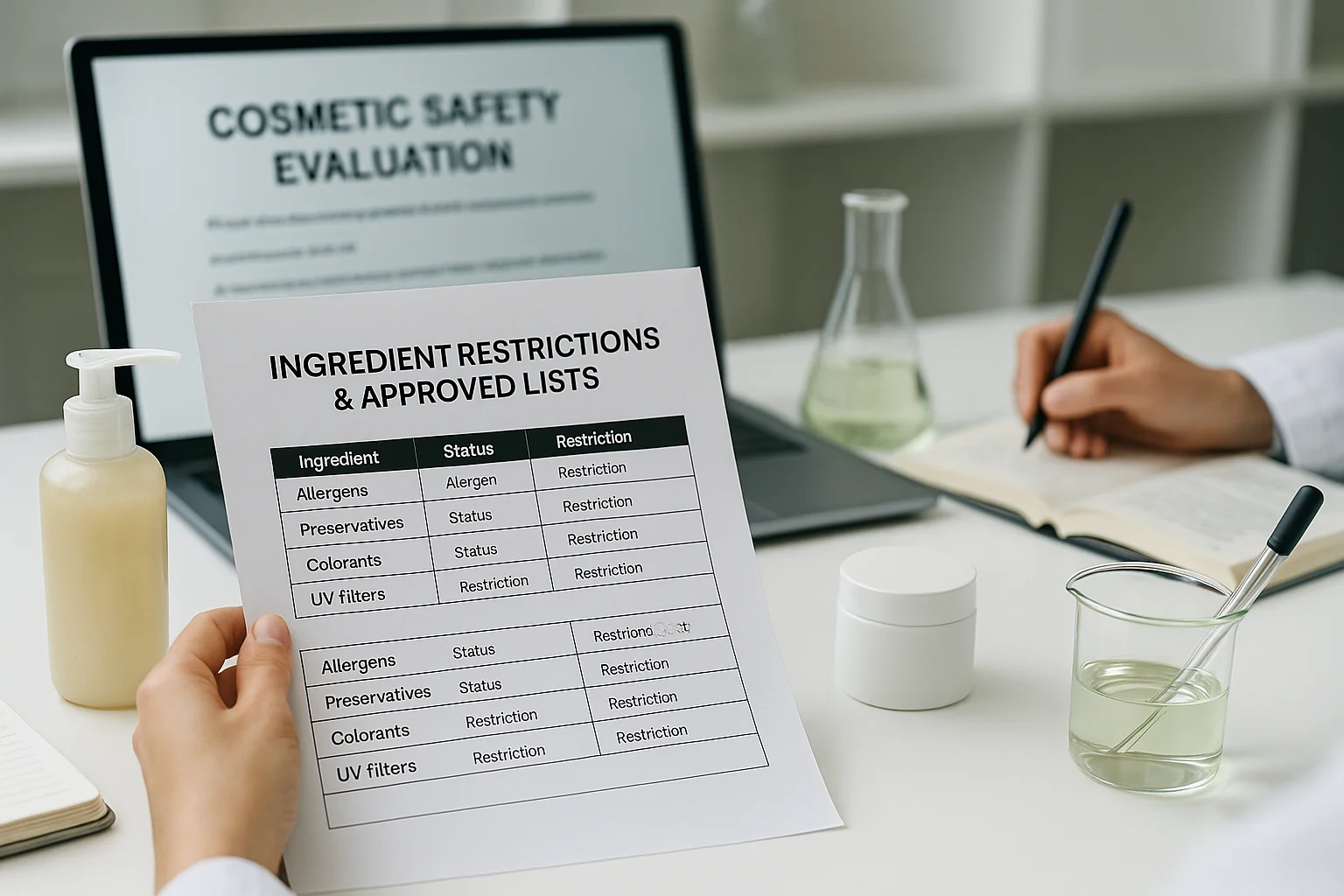
The EU has one of the world’s largest lists of banned and restricted substances—over 1,300 banned ingredients—as part of its commitment to consumer safety.
Common Restricted Categories
Allergens
Preservatives
Colorants
UV filters
To check ingredient compliance, brands often refer to:
The official annexes of the EU Cosmetics Regulation
Ingredient compliance tools from regulatory companies
Safety assessors who review formulas during the CPSR process
Even a single non-compliant ingredient can block your product from entering the EU.
EU Labeling & Packaging Requirements
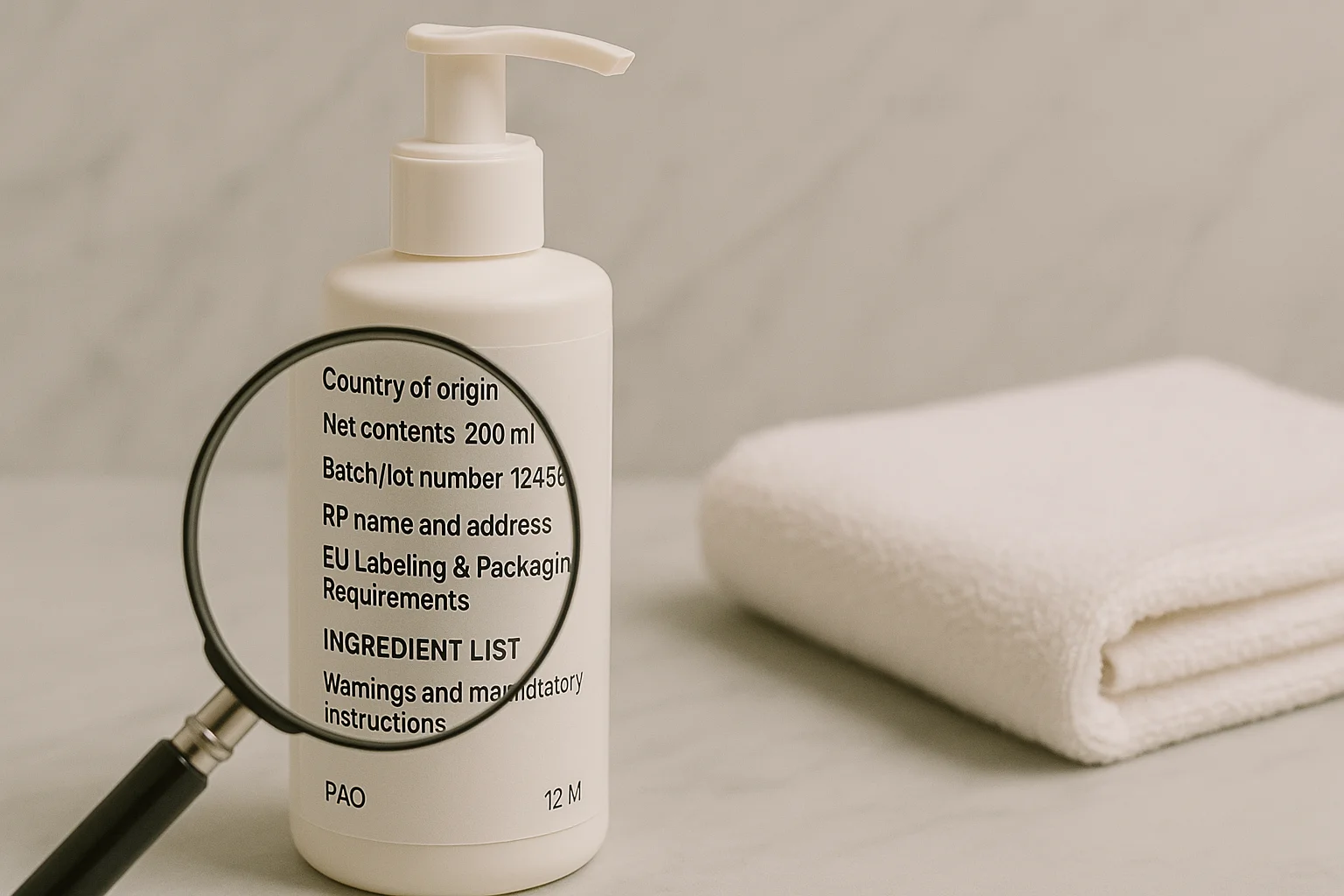
The EU demands clear and complete labeling. Missing or incorrect information is one of the most common reasons for customs delays.
What Must Appear on the Label
Your EU-compliant label must include:
RP name and address
Country of origin
Net contents
Batch/lot number
Product function
INCI ingredient list
Warnings and mandatory instructions
PAO (Period After Opening) symbol or expiration date
Language Requirements
All labels must be in the official language(s) of the countries where the product is sold.
Selling in France? French is required.
Selling in Germany? German is required.
CPNP Notification (Before Market Entry)
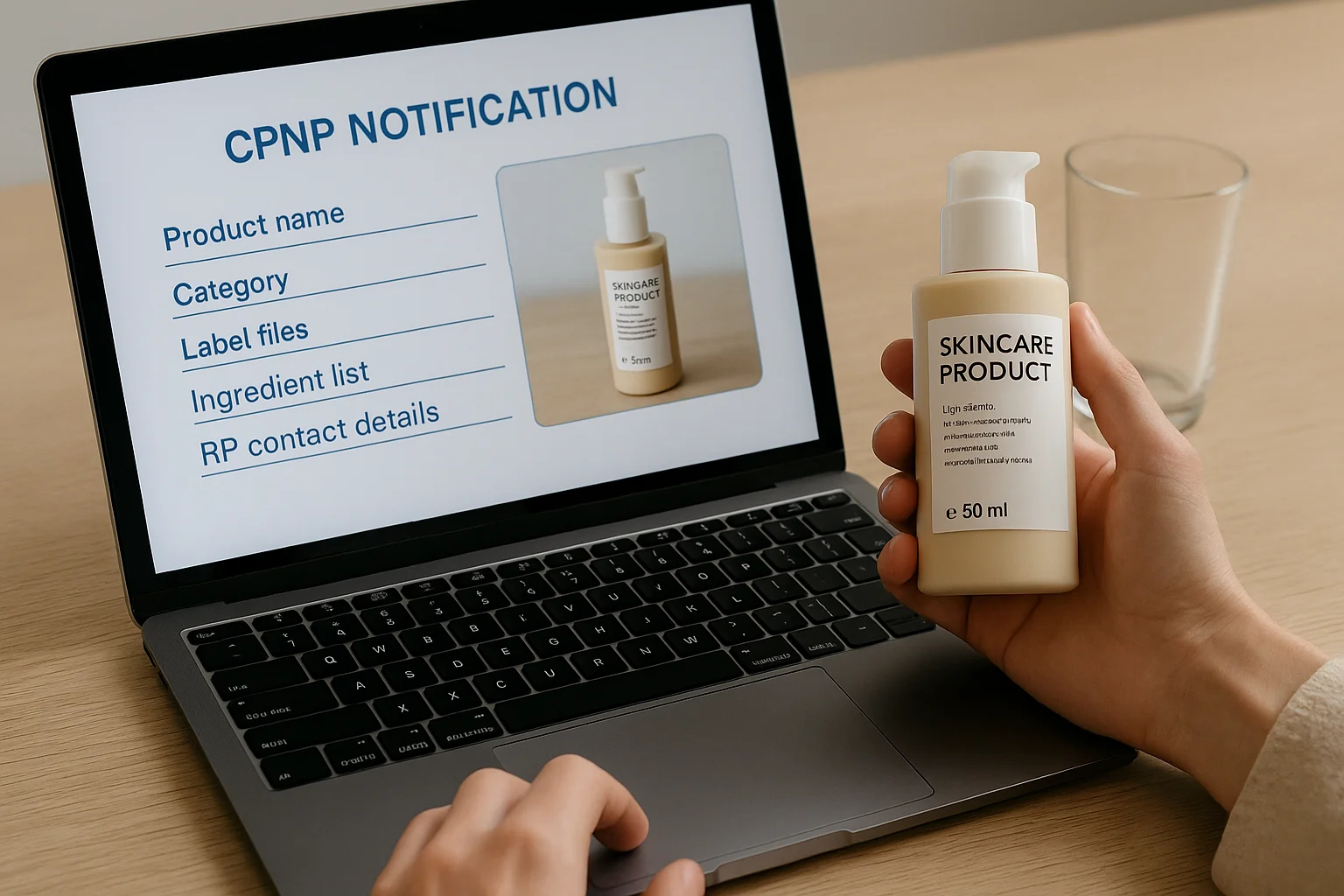
Before you can sell skincare in the EU, the product must be uploaded to the Cosmetic Products Notification Portal (CPNP).
What CPNP Is
The CPNP is an online database where brands submit essential product information to EU authorities. This step ensures traceability and safety monitoring.
What Must Be Uploaded
Typically, the CPNP entry includes:
Product name
Category
Label files
Ingredient list
RP contact details
Product packaging images
Who Submits the Notification?
The Responsible Person (RP) is legally responsible for completing the CPNP notification before the product enters the market.
US Skincare Regulations (FDA & MoCRA)
The United States has its own system for regulating skincare products. While the rules used to be more flexible than the EU, the new MoCRA law (3) now requires stronger oversight, better documentation, and more responsibility from manufacturers and importers.
Legal Framework for Cosmetics in the US

In the US, cosmetics are regulated by the Food and Drug Administration (4) under the Federal Food, Drug, and Cosmetic Act (FD&C Act).
How the FDA Defines Products
The FDA separates products into three groups:
Cosmetics — cleansers, moisturizers, lotions, makeup
OTC drugs — SPF, acne treatments, anti-dandruff, whitening with active drug claims
Cosmetic/drug hybrids — products that do both (e.g., tinted moisturizer with SPF)
If a product makes drug-like claims, such as “treats acne” or “heals eczema,” it is regulated as an OTC drug, not a cosmetic. This change in category affects testing, claims, ingredients, and labeling.
MoCRA (Modernization of Cosmetics Regulation Act)
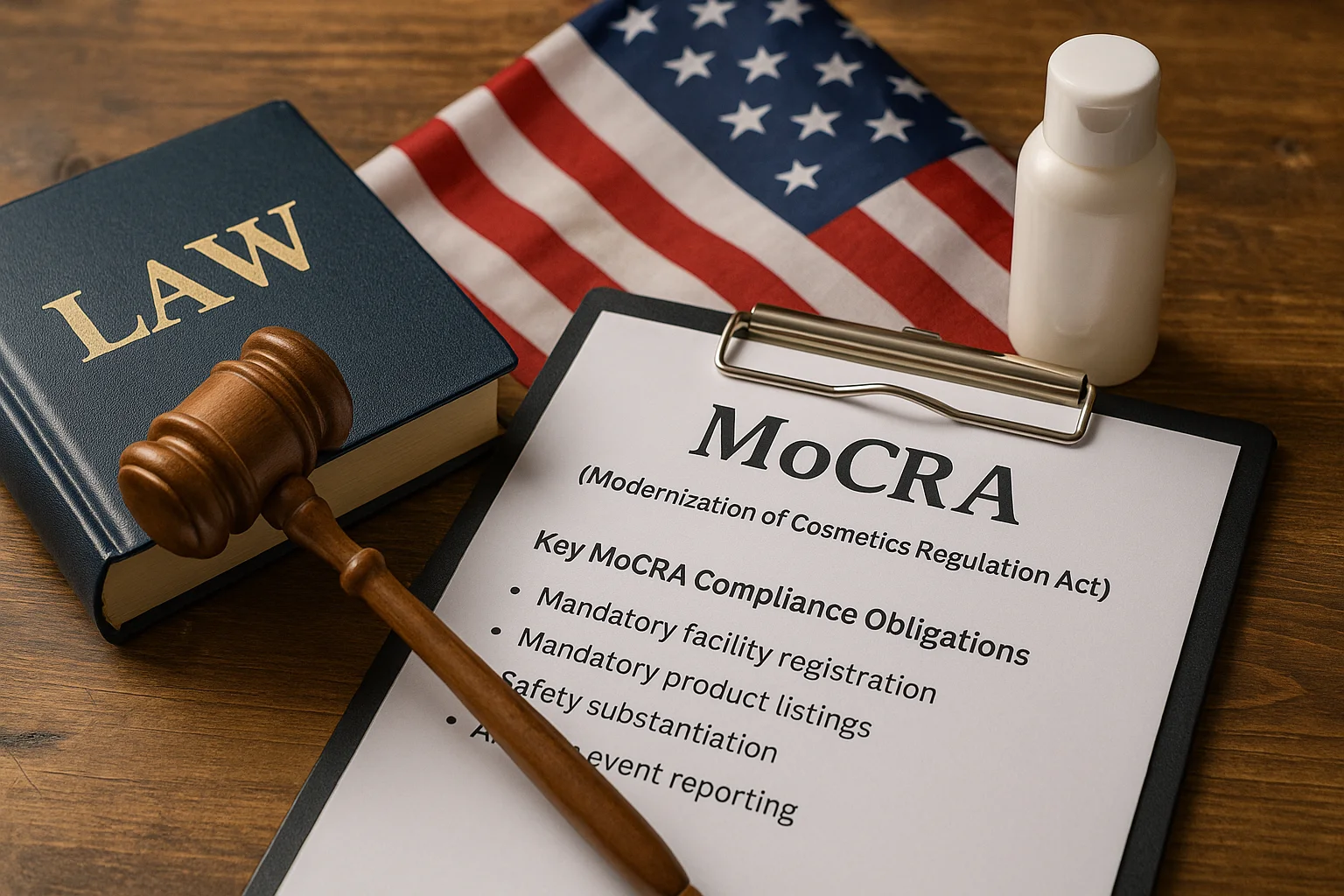
MoCRA, signed into law in 2022, created the biggest update to US cosmetic regulations in decades. It introduces new requirements for both manufacturers and importers.
Key MoCRA Compliance Obligations
Mandatory facility registration (renewed every two years)
Mandatory product listings for all cosmetics sold in the US
Safety substantiation — you must have evidence showing your product is safe
Adverse event reporting — serious events must be reported to the FDA
Recordkeeping and traceability — keeping documents for inspections
These updates make the US system more aligned with the EU while keeping a flexible structure.
Ingredient Rules & Restricted Additives
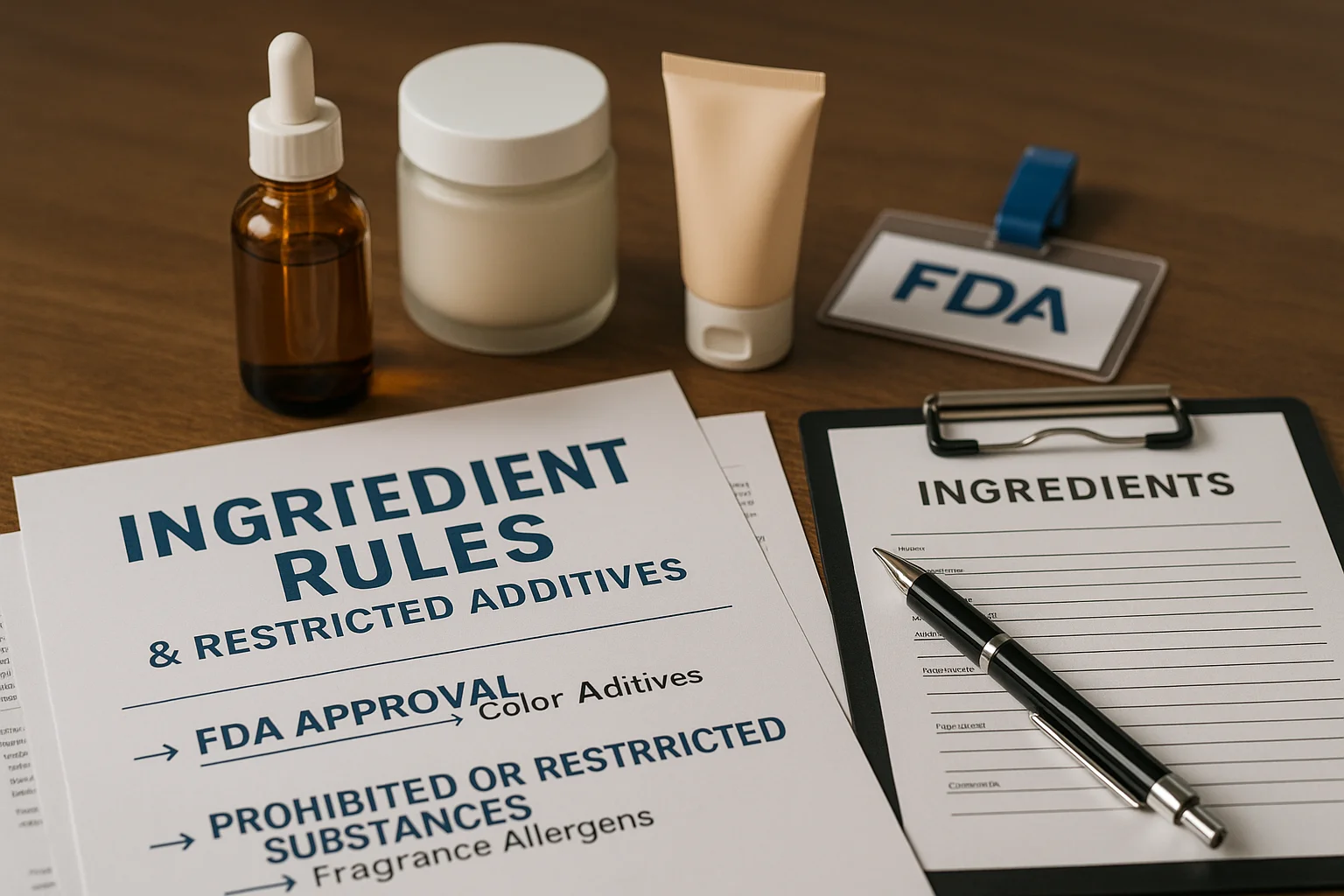
Though the US has fewer banned cosmetic ingredients compared to the EU, there are still important rules to follow.
Key Ingredient Compliance Points
Color additives require FDA approval
→ If not approved, your product can be detained or refused.Prohibited or restricted substances
→ Some ingredients cannot be used in any cosmetic.Fragrance allergens
→ Less strict than the EU, but still monitored.
Brands must ensure all raw materials meet the safety standards outlined by the FDA cosmetic regulations.
Labeling Requirements
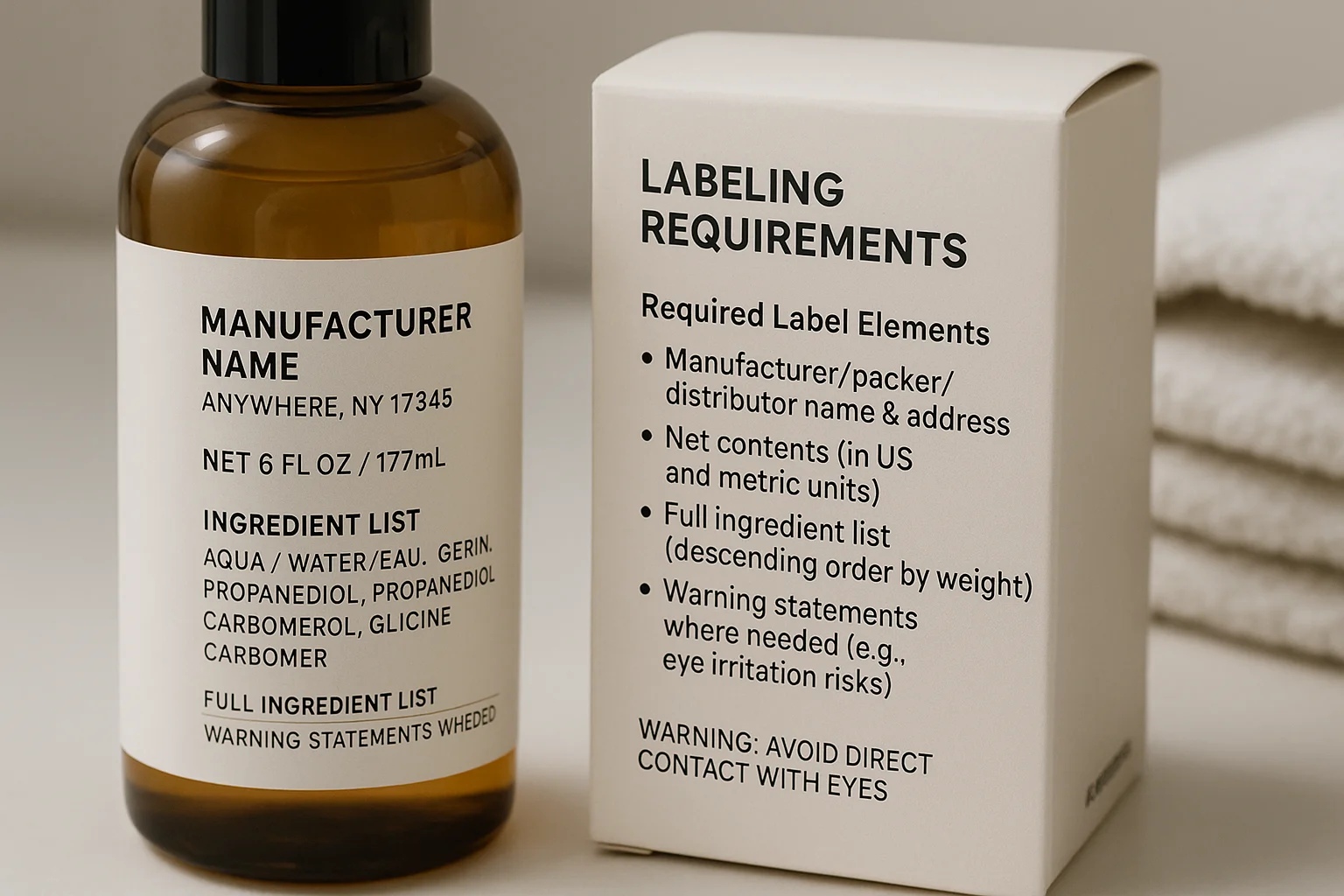
The US has clear rules for cosmetic labeling, outlined in the FDA Cosmetic Labeling Guide.
Required Label Elements
Manufacturer/packer/distributor name & address
Net contents (in US and metric units)
Full ingredient list (descending order by weight)
Warning statements where needed (e.g., eye irritation risks)
Country of origin for imported products
Incorrect or missing label information is one of the top reasons cosmetics are stopped at the border.
Import Process & Customs Clearance
Imported skincare products are inspected by both:
U.S. Customs and Border Protection (CBP)
FDA Import Division
Common Reasons Shipments Are Detained
Mislabeling or missing mandatory elements
Unapproved color additives
Claims that make the product an OTC drug (e.g., “treats acne”)
Missing or incorrect importer information
Products appearing unsafe or contaminated
A detainment slows down your shipment and may require relabeling, document review, or product return.
Tips to Avoid FDA Refusal
Ensure labels fully follow FDA requirements
Use only FDA-approved color additives
Avoid drug-like claims unless the product meets OTC rules
Work with a registered US importer or compliance partner
Keep safety documentation ready for review
EU vs US Regulations: Key Differences
| Key Topic | EU (EC 1223/2009) | US (FDA & MoCRA) |
|---|---|---|
| Ingredient Restrictions | Bans/restricts 1,300+ ingredients | Bans/restricts ~11 ingredients |
| Impact on Formulation | Often requires formula adjustments; strict toxicology review | More flexibility; fewer banned substances |
| Pre-Market Requirements | Mandatory PIF + CPSR + CPNP before selling | No pre-approval for most cosmetics; color additives require approval |
| New MoCRA Obligations | — | Facility registration, product listing, safety substantiation, adverse event reporting |
| Labeling Requirements | PAO symbol, multi-language labels, allergen disclosure, RP info | Simpler labels; no PAO required; no allergen disclosure |
| Safety Assessment | Formal CPSR by a qualified safety assessor | “Adequate safety substantiation” (flexible, no fixed method) |
| Who Oversees Compliance | EU authorities + Responsible Person (RP) | FDA + US importer/responsible person under MoCRA |
| Market Entry Style | Strict “no compliance, no launch” model | More flexible, focuses on post-market oversight |
Best Practices for Long-Term Compliance
Keeping your skincare products compliant is an ongoing process. Here are the key habits that help brands stay safe and ready for inspections in both the EU and US.

Keep Your PIF and Records Updated
Anytime you change a formula, switch suppliers, update packaging, or adjust testing, make sure your PIF (EU) and product documents (US) are updated.
Accurate files protect you during audits and avoid delays.
Monitor Regulation Changes
Rules change often:
The EU regularly updates ingredient bans and limits.
The US continues rolling out new MoCRA requirements.
Checking updates helps you avoid last-minute reformulation or labeling issues.
Re-Check Safety When Formulas Change
Even small changes can affect safety.
When anything in the formula shifts, review:
Ingredient safety
Stability
Micro testing
EU CPSR
US safety data
This keeps both markets fully covered.
Organize Supplier Documentation
Collect and store all supplier documents clearly, such as:
COA
SDS
Allergen reports
GMP proof
A clean system makes compliance faster and reduces risk.
Ready to Import Skincare to the EU or US?
If you want to enter the EU or US market with confidence, we’re here to help.
Contact us today to discuss your product, get expert advice, or request a tailored compliance plan.
Let’s help your skincare brand launch smoothly and grow globally.


 EN
 JA
