How to Safely Source Skincare Products from China: Step-by-Step Guide
This article outlines a full process for safely sourcing skincare products from China — from market research and compliance to supplier auditing, quality control, logistics and brand protection.
China is a popular place to source skincare because the country has a huge manufacturing base, lower costs, and plenty of options for custom formulas and packaging. Even small brands can develop high-quality products without spending too much.
At the same time, sourcing from China does come with risks like quality issues, regulation differences, and shipping delays. This guide is for small brands, startups, and anyone new to sourcing who wants a simple, safe, and clear way to work with Chinese skincare suppliers.
Define Your Product & Market Strategy
Before you contact suppliers, you need a clear idea of what you want to make and where you plan to sell it. This helps you choose the right formulas, packaging, and factories from the start.
Know Your Target Market and Its Regulations
Different regions have different rules for skincare (1).
US: safety and clear labeling
EU: strict ingredient and documentation standards
Asia: varies by country but focuses on safe formulas and honest claims
Knowing these rules early will save you time and prevent expensive changes later.
Shape Your Brand Positioning
Decide what you want your product to stand for.
What benefits will it offer?
Will it be natural, clean, or clinical?
What kind of packaging fits your brand story?
Clear positioning helps suppliers understand exactly what you want.
Compliance is one of the most important parts of sourcing skincare from China. It keeps your products safe, protects your brand, and helps you avoid customs delays.
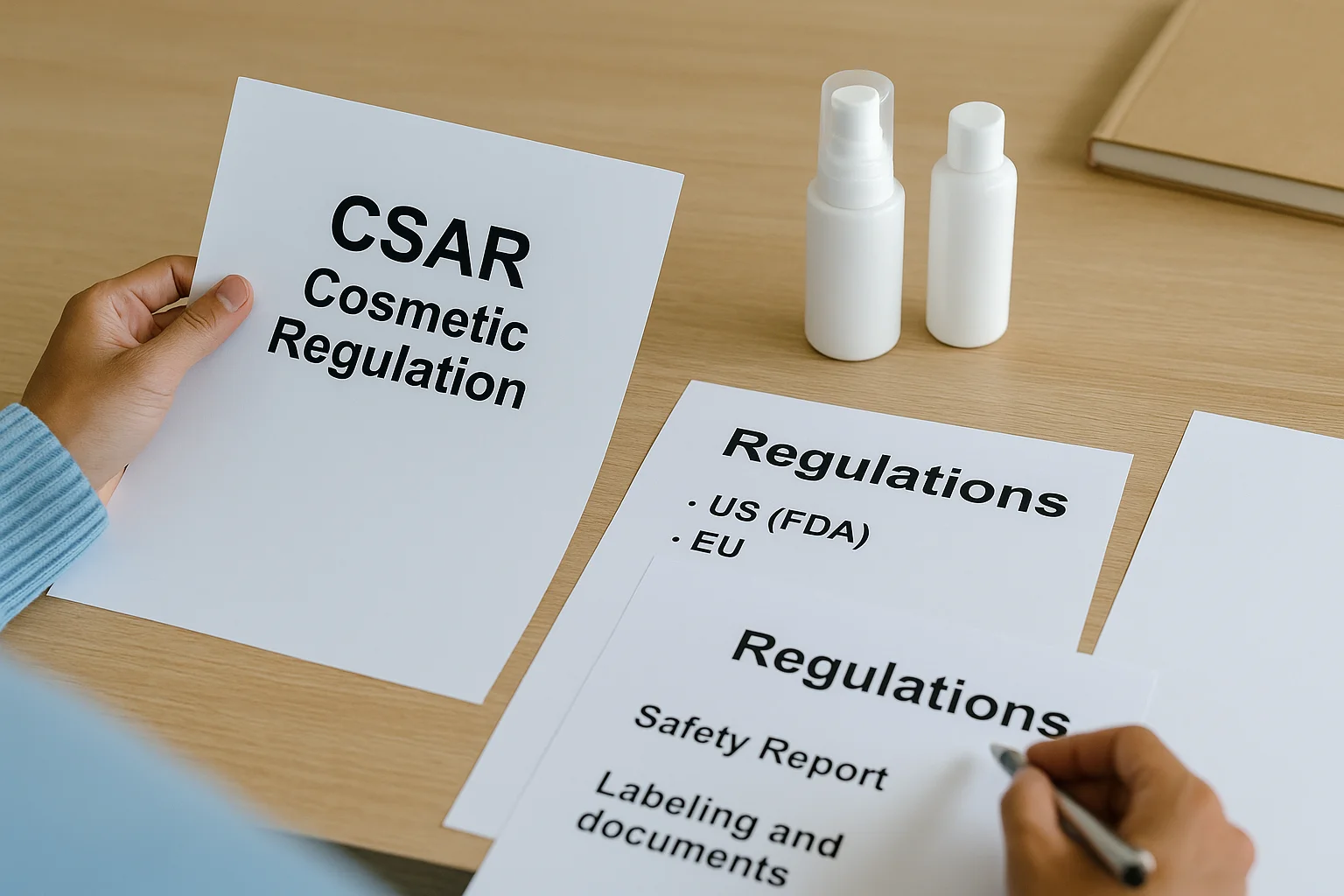
China’s Rules: What CSAR Means
China manages cosmetics under CSAR, which covers how products are made, tested, labeled, and exported. Make sure your supplier follows CSAR and can provide basic documents like ingredient lists and test reports.
EU: strict banned ingredients and safety documentation
Knowing these rules early helps you avoid reformulating later.
Tariffs & Trade Policies
Trade policies can affect ingredient costs and final pricing. Some raw materials may become more expensive when tariffs change.
Important Documents You’ll Need
Prepare these before shipping:
HS codes
Safety reports
Labeling and claim documents
MOQ and production details
Good documentation keeps customs smooth and helps you launch without surprises.
Find, Assess, and Select Reliable Chinese Skincare Suppliers
Choosing the right supplier is one of the biggest factors in whether your skincare sourcing project succeeds. Here’s a simple way to understand supplier types, how to check their credibility, and what red flags to avoid.
Types of Suppliers in China
You’ll usually meet three types of suppliers (2) :
Factories: best for stable quality and long-term production.
Agents: helpful if you’re new, but add extra cost.
Trading companies: offer many products but may not control quality directly.
How to Verify a Supplier
Always ask for basic documents and proof of compliance:
If a supplier cannot provide these, it’s safer to walk away.
Where to Find Good Suppliers
Reliable suppliers often appear on trusted sourcing channels:
B2B platforms: Alibaba, Made-in-China
Trade fairs: China Beauty Expo, Canton Fair
Referrals: recommendations from other brand owners
These channels give you access to verified companies with real manufacturing ability.
Red Flags to Watch For
Be careful if you notice:
Unwillingness to show certifications
Very vague MOQ or pricing
Slow or inconsistent communication
Refusal to share factory photos or videos
“We make everything” (often a sign of a trading company pretending to be a factory)
If something feels off, it usually is.
Sample Development & Contract Negotiation
Once you’ve chosen a supplier, the next step is creating samples and setting up a clear contract. This part is important because it shapes the final product and protects your brand during production.
Develop Strong Product Samples
Start with small steps to confirm quality before placing a big order.
Formula sample: check texture, scent, absorption, and skin feel.
Packaging prototype: test durability, print quality, and overall look.
Stability and shelf-life tests: make sure the formula stays stable under heat, light, and time.
Good samples help you set clear expectations for the production batch.
Negotiate a Clear, Safe Contract
A solid contract prevents problems later. Make sure it covers:
MOQ (minimum order quantity)
Pricing and what’s included
Tooling or mold fees (if custom packaging)
Lead time and delivery schedules
Payment terms
Intellectual property protection
Liability if products fail tests or don’t meet regulations
Keep everything simple, clear, and written.
Add “Quality Gates” to Reduce Risk
Quality gates are checkpoints built into the contract to keep production on track. Include:
Design approval — formula and packaging confirmed
Pre-production batch — small run for testing
In-line inspection — quality check during production
Final QC — inspection before shipment
These steps catch problems early and help you avoid costly mistakes.
Production, Quality Control & Assurance
Once your samples and contract are set, it’s time to move into production. This stage is all about keeping everything consistent, safe, and traceable so your final products meet the standards of your brand and your market.
Keep Production Transparent
A good supplier should give you clear visibility into how your products are made. This includes:
Raw material traceability: knowing where ingredients come from and ensuring they meet safety standards.
Formula control: no changes to the formula without your approval.
Production records: batch numbers, ingredient logs, and manufacturing dates.
These details help you track quality and solve issues if anything goes wrong.
Use Strong Quality Assurance Methods
Quality control doesn’t stop at checking the final product. It should happen throughout the process.
On-site audits: in person or video calls to check cleanliness, equipment, and workflow.
Third-party lab testing: test for microbiology, heavy metals, stability, and claim verification.
Regular reporting: your supplier should share test results and inspection photos.
This step ensures the product is safe and compliant before it ships.
Test Packaging & Logistics Readiness
Skincare isn’t just about the formula—packaging must survive transport and storage. Consider adding:
Transport vibration tests — to ensure bottles don’t leak during shipping
Temperature stress tests — important for creams, serums, and natural formulas
Shelf display simulations — confirm packaging can handle real retail conditions
These extra tests help prevent spills, broken pumps, label damage, and other issues that can hurt your brand reputation.
Good production oversight and strong QC give you confidence that every unit shipped matches your standards and keeps your customers safe.
Logistics, Customs Clearance & Importation
Once your products pass quality checks, the next step is getting them safely from China to your warehouse. Smooth logistics and proper customs paperwork will save you time, money, and stress.
Choose the Right Shipping Method
Pick a logistics method based on your budget and timeline:
Air freight: fast but more expensive
Sea freight: cheaper for large orders but slower
Freight forwarder: handles paperwork, booking, and coordination for you
Insurance: protects your goods during transit
A good freight partner can make the whole process much easier.
Handle Customs the Right Way
Customs clearance can be simple if your documents are prepared correctly. You’ll need:
Correct HS codes for skincare
Commercial invoice
Packing list
Bill of lading or airway bill
Duties and taxes prepared
Import broker if your market requires one
Using the right HS code and paperwork helps you avoid delays or extra charges.
Manage Products After Arrival
Once your goods land in your country, treat them like professional inventory.
Batch tracking: record batch numbers for traceability
Proper storage: keep products in a cool, dry place
Inventory rotation: use “first in, first out” to maintain freshness
Recall readiness: have a simple plan in case a batch needs to be pulled
Good post-arrival management ensures your skincare stays safe and high-quality all the way to your customers.
Protecting your brand is just as important as choosing the right formula. When sourcing from overseas, you need to make sure your name, designs, and products stay safe.
Register Your Trademark Early
Always register your trademark in China as well as your main export markets. China follows a “first to file” system, which means someone else can legally register your brand before you do. Securing your trademark early protects you from copycats and future disputes.
Protect Your Formula & Packaging Design
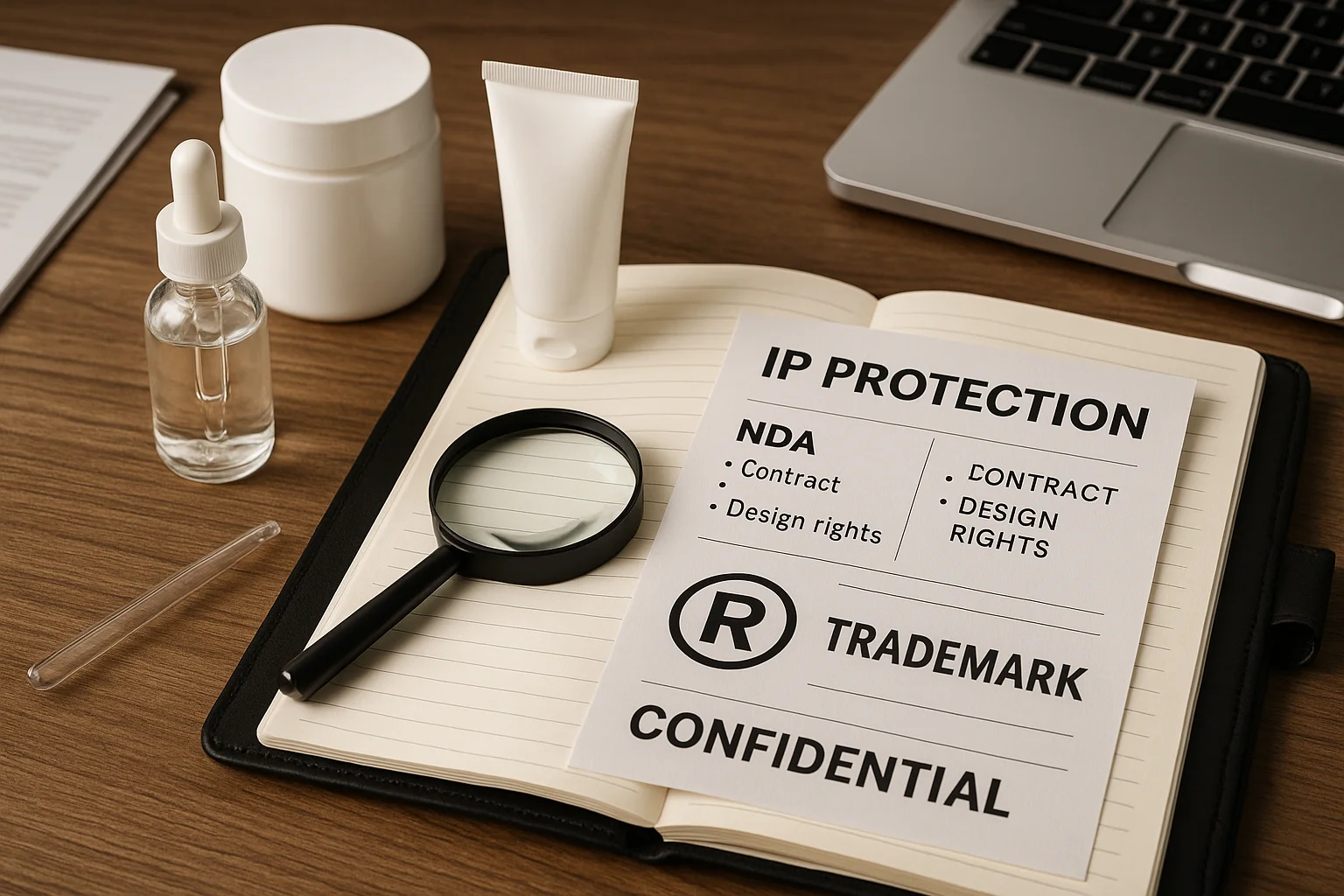
Use clear agreements to keep your ideas and designs safe:
NDAs (non-disclosure agreements)
IP clauses in the contract
Rules for formula ownership and usage
Image rights or packaging design rights
These simple documents help prevent unauthorized copying or reuse of your brand assets.
Monitor Your Brand and Stay Prepared
Once your product is on the market, keep an eye on how it’s being sold and used.
Watch e-commerce platforms for counterfeits
Monitor social media for misuse of your content or brand images
Check for grey market imports that may harm your pricing
Have a recall or incident-response plan in case you need to react quickly
Being proactive helps you catch problems early and protect your reputation with customers.
Supply Chain Resilience & Continuous Improvement
A reliable supply chain helps your skincare business stay stable and grow. Once you start production, it’s important to keep improving how you work with your suppliers.
Check Supplier Performance Regularly
Review how well your supplier is doing over time:
On-time delivery
Quality consistency
Clear communication
Flexibility when you need changes
This helps you decide if they’re still the right partner.
Keep More Than One Supplier
Relying on only one factory can be risky.
Dual sourcing protects you from delays, shortages, or sudden price changes.
A backup supplier keeps your business running during unexpected problems.
Add Sustainability to Your Strategy
More customers want clean, safe, and eco-friendly skincare. Consider suppliers who offer:
Eco-packaging
Ethically sourced ingredients
Clean beauty formulations
Track Key Data to Improve
Simple KPIs help you understand and improve your supply chain:
Cost per unit
Defect rate
Lead time changes
Logistics cost percentage
Tracking these numbers gives you more control and helps your business grow safely.
Ready to Build a Safe and Reliable Skincare Supply Chain?
Sourcing skincare from China can be safe and successful when you choose reliable suppliers, follow regulations, and use clear quality checks. With the right steps, even small brands can launch high-quality products and grow with confidence.
If you want help finding trusted suppliers or managing your skincare sourcing process, we’re here to support you. Contact us today and let’s build a smooth, safe, and reliable supply chain together.
FAQs
Can I start with a very small order (e.g., 100 units) when sourcing from China?
Yes — but it depends on the supplier. Many factories have minimum order quantities (MOQs) that may start from 1,000 or more units, especially for custom formula or packaging.
How long does it take from placing an order in China to receiving the goods?
It varies widely based on formula complexity, packaging, production capacity, shipping mode, and customs. For example, after final approval of samples, a typical production might take 6-8 weeks, plus shipping time.
Do I need to visit the factory in China in person?
Not always, but it’s highly recommended if budget and time allow. If you can’t visit, you should at least request detailed live video walkthroughs of the production line, photos of raw materials, and third-party inspections.
What happens if the regulatory rules change after production?
Regulations (in China or your target market) can evolve, which might affect packaging, labeling, or ingredient approvals. For example, the Cosmetics Supervision and Administration Regulation (CSAR) in China is periodically updated.
How do I protect my design and formula when working with a Chinese supplier?
Use a combination of legal and operational steps:
Sign NDAs and ensure your contract includes clear IP clauses.
Register your trademark in both China and export markets early.
Limit how widely your formula details and artwork are shared. These steps help you control access and minimize risk.
References for this information:
(1) Cosmetics Business, “Guide to Importing Wholesale Beauty Products from China,” Cosmetics Business Official Website, 2025.
(2) Aurora Global Brands, “7 Tips for Working With Cosmetics Manufacturers From China,” Aurora Global Brands Official Website, 2025.
Emma has 6 years of experience in the skincare industry, with a strong focus on formulation logic, ingredient function, and real-world skin behavior. She is especially interested in how different skin types respond to routines and products, and she regularly studies professional skincare and dermatology resources to improve her practical guidance.
Note: Emma is not a medical professional. Her writing is based on industry experience and continuous learning. For persistent skin issues, consult a dermatologist.
Orange-peel skin can be caused by enlarged pores, collagen loss, clogged pores, or body dimpling. Learn what helps, what to avoid, and when to seek medical advice.
Oily skin is caused by genetics, hormones, climate, and skincare habits. Learn what triggers excess oil and how to reduce shine with the right routine.
To provide the best experiences, we use technologies like cookies to store and/or access device information. Consenting to these technologies will allow us to process data such as browsing behavior or unique IDs on this site. Not consenting or withdrawing consent, may adversely affect certain features and functions.
Functional
Always active
The technical storage or access is strictly necessary for the legitimate purpose of enabling the use of a specific service explicitly requested by the subscriber or user, or for the sole purpose of carrying out the transmission of a communication over an electronic communications network.
Preferences
The technical storage or access is necessary for the legitimate purpose of storing preferences that are not requested by the subscriber or user.
Statistics
The technical storage or access that is used exclusively for statistical purposes.The technical storage or access that is used exclusively for anonymous statistical purposes. Without a subpoena, voluntary compliance on the part of your Internet Service Provider, or additional records from a third party, information stored or retrieved for this purpose alone cannot usually be used to identify you.
Marketing
The technical storage or access is required to create user profiles to send advertising, or to track the user on a website or across several websites for similar marketing purposes.








 EN
 JA
