

Do You Really Need to Refrigerate Skincare?
Short answer: most of the time, no.
Refrigerating skincare is optional, not a rule.
Most products are designed to stay stable at room temperature.
The real question is simple: does cold actually add a benefit for this product?
If the answer is no, your fridge isn’t necessary.
For general skincare storage rules, see our full guide on how to store skincare properly.
What Refrigeration Actually Does to Skincare
It can slow certain types of breakdown
Lower temperatures can slow oxidation and heat-related chemical changes.
For products with sensitive ingredients, cooler storage may help them degrade more slowly over time.
This is about slowing change, not stopping it.
It can feel soothing on the skin
Cold products can temporarily reduce puffiness and redness by causing mild blood-vessel constriction.
This is a short-term comfort effect, not a deeper skin treatment.
You may notice it most around the eyes or on flushed, reactive skin.
It does not make products stronger or permanent
Refrigeration does not boost ingredient strength, increase penetration, or turn a formula into something more powerful.
It also does not make skincare last forever or prevent normal aging of a product.
If a formula isn’t meant to benefit from cold, refrigeration simply changes how it feels—not how it works.
Skincare Products That Truly Benefit From Refrigeration
This is where refrigeration can make a real, practical difference—not for every product, but for a specific few.
The key is whether cold improves stability, comfort, or both.
High-Benefit: Worth Refrigerating
Among all skincare products, only a small group truly benefits from refrigeration—mainly those that are heat-sensitive or used for cooling comfort.
Vitamin C serums (especially clear, water-based)
Vitamin C is sensitive to heat, air, and light.
Cooler storage can help slow oxidation, especially for thin, water-based formulas that discolor easily.
Refrigeration won’t make vitamin C stronger, but it can help it stay usable and pleasant for longer.
Eye creams and eye gels
Cold eye products can temporarily reduce puffiness and feel more soothing on tired or swollen under-eyes.
This is a comfort and appearance benefit, not a treatment for dark circles or aging—but many people notice a visible difference in the morning.
Soothing gels and post-sun products
Products designed to calm the skin—such as aloe gels or after-sun treatments—often feel more effective when applied cold.
The cooling sensation can help ease redness, heat, and discomfort, especially after sun exposure or irritation.
Products That Do Not Need the Fridge
For many skincare products, refrigeration adds no meaningful benefit.
They’re designed to stay stable and effective at normal room temperature when stored properly. Cooling them won’t make them work better—it just changes how they feel.
Most moisturizers and creams
Creams are formulated to be stable emulsions at room temperature.
Refrigeration doesn’t improve performance and can make textures feel stiff or harder to spread, especially in richer formulas.
Cleansers and toners
These products are short-contact and rinsed off (cleansers) or already very stable (toners).
Cold storage doesn’t improve cleansing power or skin benefits.
Niacinamide and hyaluronic acid serums
Both ingredients are highly stable and not heat-sensitive in normal home conditions.
Keeping them in the fridge won’t boost results or extend usefulness in a noticeable way.
Sunscreen
Sunscreen should be stored cool and out of heat, but refrigeration isn’t necessary.
What matters most is avoiding hot cars and direct sun—chilling doesn’t increase SPF or protection.
Products You Should Avoid Refrigerating
Some products don’t just fail to benefit from cold—they can actually perform worse when refrigerated.
The issue isn’t safety, but formula behavior at low temperatures.
Facial oils and oil-based serums
Cold temperatures can cause oils to thicken, cloud, or separate.
This doesn’t usually make them unsafe, but it can change texture, spreadability, and consistency in ways that reduce a good user experience.
Clay masks
Refrigeration can make clay masks stiffer and harder to apply evenly.
The cold can alter how the clay holds moisture, leading to cracking or uneven drying once applied.
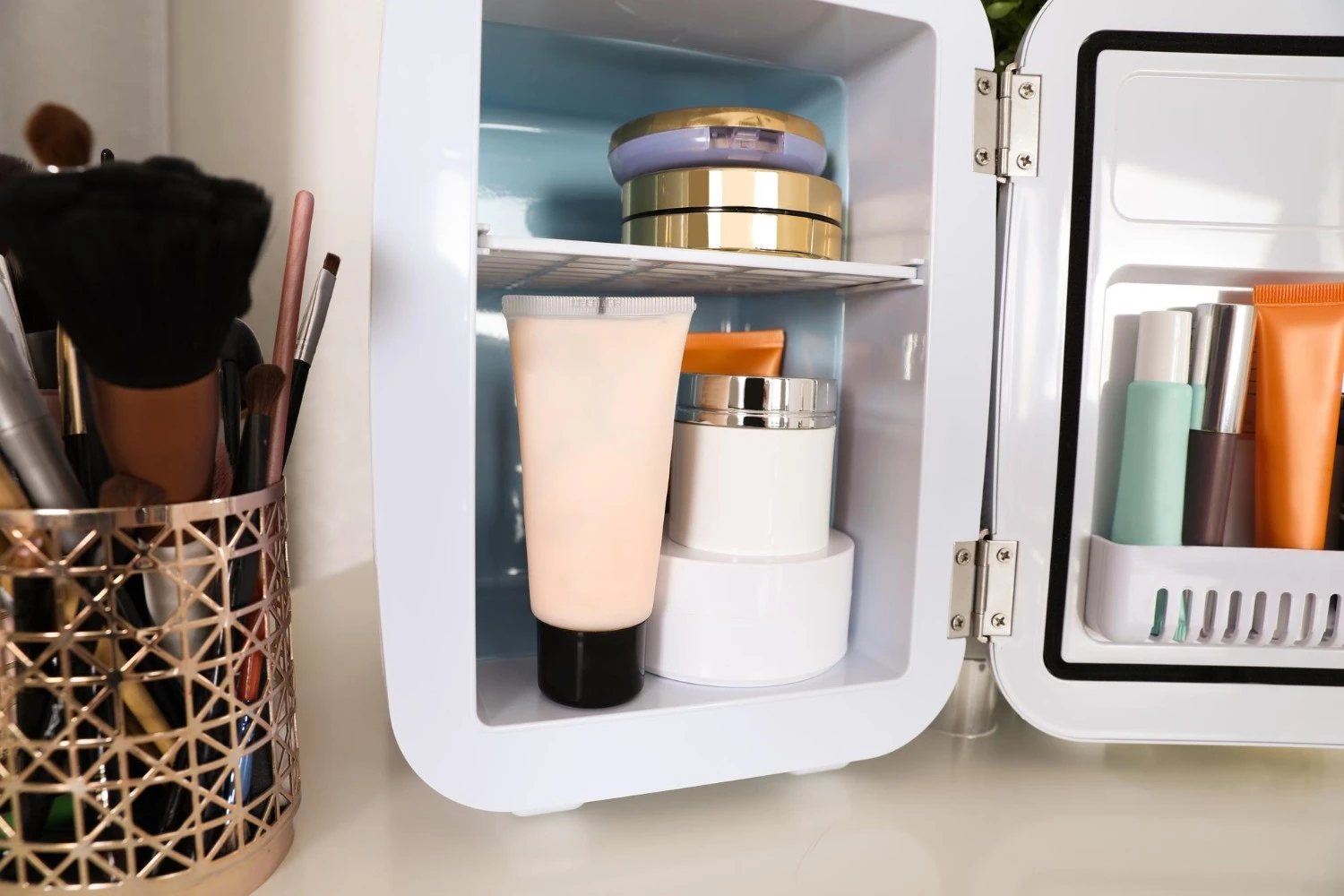
Makeup products
Foundations, concealers, and cream makeup are formulated to perform at room temperature.
Cold storage can affect emulsion stability, making products harder to blend or causing separation over time.
Why cold isn’t a good match here
These formulas rely on consistent texture and spread, not cooling effects or heat-sensitive actives.
Refrigeration introduces unnecessary texture changes without offering any functional upside.
For these products, room temperature isn’t a compromise—it’s the condition they’re designed for.
Does Refrigeration Extend Shelf Life?
Sometimes—but only in a limited, specific way.

It may slow oxidation for certain actives
Lower temperatures can slow chemical reactions, including oxidation.
For ingredients that are sensitive to heat and air—like some forms of vitamin C—refrigeration may help them degrade more slowly over time.
This effect is modest, not dramatic.
It does not replace preservatives or packaging
Refrigeration cannot compensate for weak preservation systems, poor packaging, or frequent air exposure.
A well-formulated product in airtight, opaque packaging matters far more than whether it’s kept cold.
Cold storage supports good formulation—it doesn’t fix a bad one.
Expiration dates still apply
Products still age, even in the fridge. Preservatives lose effectiveness over time, and ingredients naturally break down.
If a product smells off, changes color or texture, or starts irritating your skin, refrigeration doesn’t make it safe to keep using.
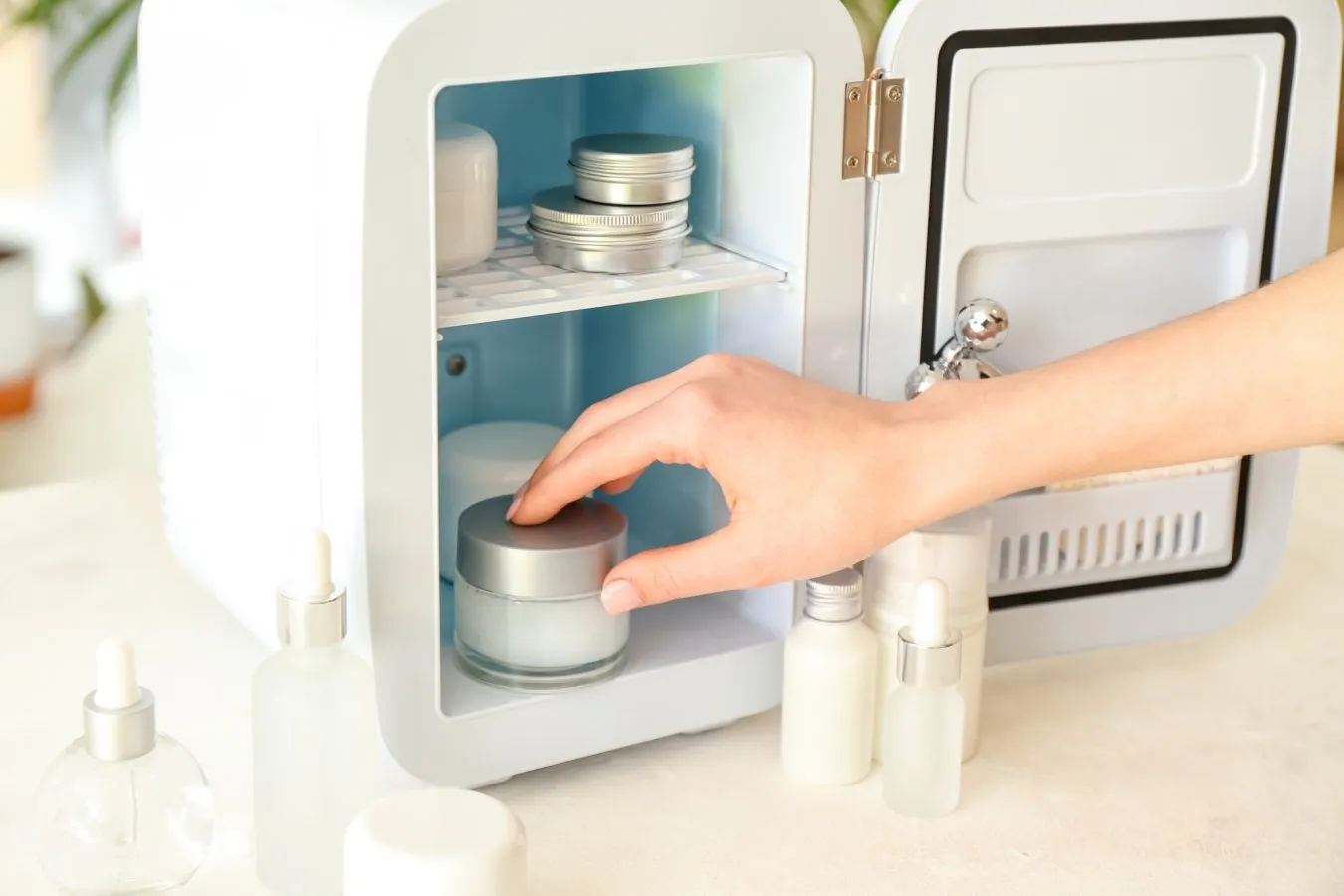
Do You Need a Skincare Fridge?
For most people, no—it’s not a requirement.
When a skincare fridge can be helpful
A dedicated skincare fridge makes sense if you regularly use several products that benefit from cold storage, such as vitamin C serums, eye gels, or soothing post-sun treatments. It keeps everything consistently cool and easy to access.
When it’s unnecessary
If you only refrigerate one product occasionally, a separate skincare fridge doesn’t add much value. The extra space, cost, and maintenance aren’t justified for light or infrequent use.
A regular refrigerator works fine
From a skincare performance standpoint, a standard household fridge provides the same cooling benefit.
There’s no special temperature or feature required—cool, stable storage is what matters.
Common Refrigeration Mistakes
Refrigerating skincare is simple, but a few common habits can cancel out the benefits—or create problems that didn’t exist before.
Refrigerating everything “just in case”
More cold does not mean more effective. Many products don’t benefit from refrigeration, and some textures actually get worse. A fridge works best when you use it for a small, targeted group of products that truly gain from cold.
Moving products in and out every day
Frequent temperature changes can cause condensation, especially on jars, droppers, and lids. Extra moisture around openings can increase mess and raise contamination risk. If you refrigerate a product, it’s better to keep its storage routine consistent.
Confusing “feels good” with “works better”
A chilled product can feel soothing and refreshing, but that sensation doesn’t automatically mean better results. Cooling mainly affects comfort and, for certain formulas, stability—not the strength of the ingredients.
Quick Decision Guide
If you use vitamin C regularly, refrigeration can help slow oxidation and keep the serum more stable.
If reducing puffiness matters to you, chilling eye creams or gels can add a noticeable comfort benefit.
If your routine is simple and stable, room-temperature storage is usually more than enough.
If you travel often or rotate products, refrigeration adds little practical value.


 EN
 JA
